


A crisp, buttery base, a generous layer of apples and a fine, golden crumble topping. We show you how to make a Polish apple pie that slices neatly once cool, with tender pieces of fruit still visible in the filling.
The label says orange, chocolate and caramel. We brew the coffee, take a sip and… do not necessarily recognise those notes. Meanwhile, the person next to us says they can clearly pick out citrus. Experiences like this can leave us wondering: was the coffee brewed incorrectly? Is the description exaggerated? Or does recognising a coffee’s character require a special talent?
To understand these differences, it helps to distinguish three things: what we perceive, how we describe it and whether we enjoy it. They are connected, but each involves something different.
There is more to coffee flavour than what we taste on the tongue
In everyday conversation, we use the word “taste” to describe the whole experience of drinking coffee. From a physiological perspective, however, that experience involves several senses working together. Taste allows us to recognise basic qualities such as sweetness, sourness and bitterness. Smell provides information about aroma, while we also perceive the temperature and texture of the drink. Together, these sensations create the flavour experience we associate with a particular coffee.
We perceive aroma both when we smell coffee and when we drink it. In the latter case, volatile compounds travel from the mouth through the throat to the olfactory region in the nose. This is known as retronasal olfaction. It helps explain why a blocked nose can make a familiar drink seem to lose its character, even though we can still detect bitterness or sourness.
When we say that a coffee reminds us of orange, we may therefore be describing a combination of citrus aroma and acidity. Sourness alone is not enough to identify a particular fruit.
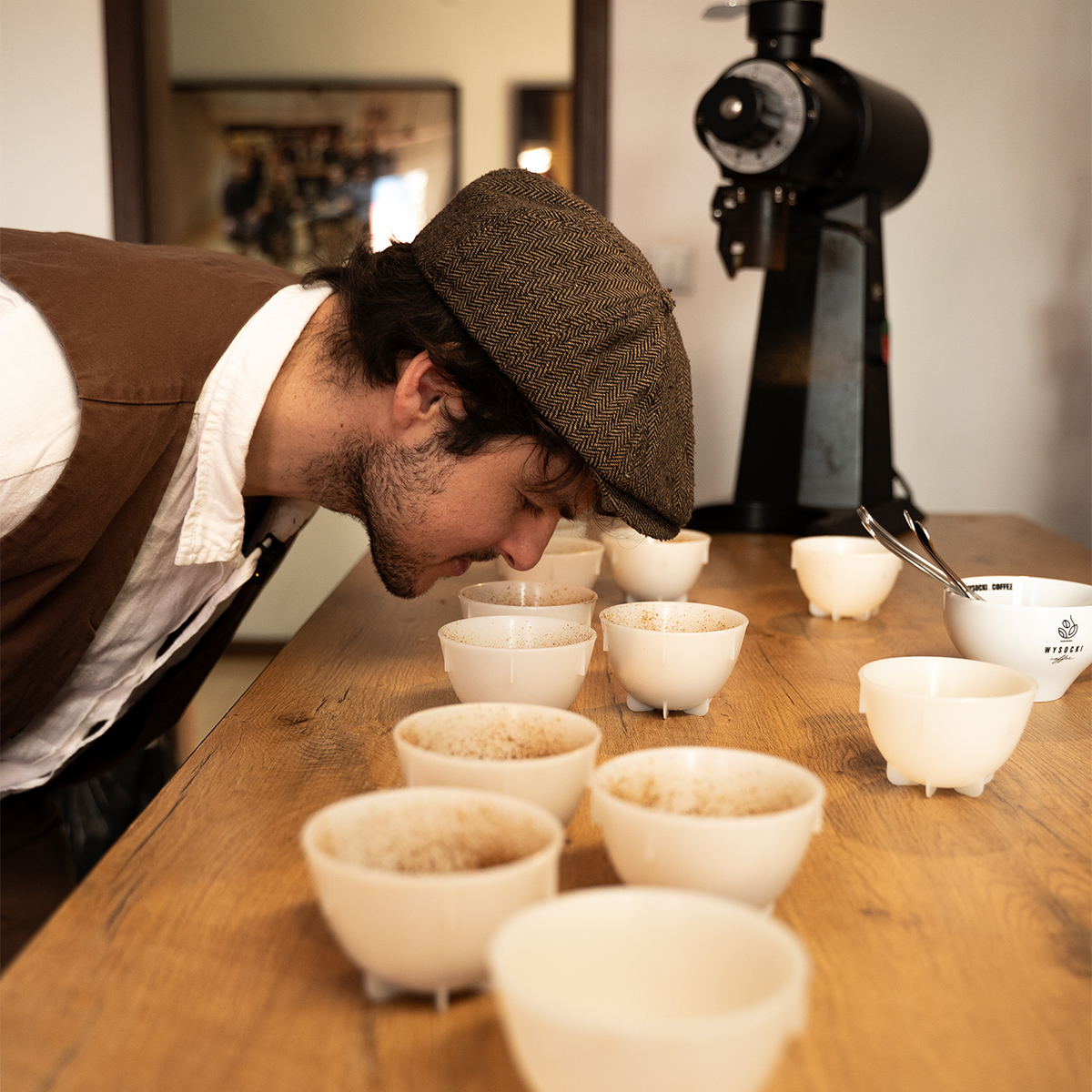
What does research tell us about aroma perception?
In a study published in Food Research International in 2026, researchers investigated how participants perceived the aroma of roasted coffee and its individual aroma compounds. They used a technique that separates volatile compounds and allows their odours to be assessed. Participants rated the intensity and pleasantness of the smells. The researchers also assessed their olfactory sensitivity and examined a particular variant of the OBPIIa gene.
The findings indicated associations between individual olfactory sensitivity, the genetic variant examined, and how many aroma compounds participants could detect and how intensely they perceived them. Participants did not all perceive them in the same way.
This is an important example of the biological basis of sensory differences, but it does not fully explain our preferences. The experiment involved particular stimuli and conditions. It does not establish that one gene determines which coffee we will enjoy, or that someone’s genotype can be used to choose their ideal bag. Its practical implication is more modest: the same aroma may not be equally noticeable to everyone.
Detecting an aroma and naming it are different skills
We may notice a fruity character in a coffee while finding it difficult to say which fruit it resembles. Describing it means finding a familiar association and a suitable word. This is why sensory references can be helpful during tasting.
The Coffee Taster’s Flavor Wheel, developed by the Specialty Coffee Association and World Coffee Research, allows us to move from broad categories to more specific descriptions. We can start with “fruity”, then consider “citrus”, and only afterwards look for an association with orange, lemon or grapefruit. There is no need to reach the most specific descriptor every time.
Professional sensory assessment also uses defined sensory references. These help tasters establish what they mean by a particular term and compare their observations. Developing a shared language therefore takes practice as well as a sensitive nose.
We can take a similar approach at home: smell orange peel, cocoa or nuts and consider how their aromas differ. This is an exercise in comparing and naming sensations. It does not guarantee that we will recognise the same characteristics in every coffee.

Do we need to find every tasting note on the bag?
A sensory description helps us imagine a coffee’s character. For coffee without added flavourings or ingredients, terms such as “chocolate” or “orange” describe associations made during tasting, rather than ingredients added to the beans.
It is useful to treat these notes as a guide to exploring the coffee. If we notice fruitiness but cannot identify a particular fruit, we can still describe our experience accurately. Rather than feeling that we ought to detect orange, we might notice a citrus aroma, pronounced acidity or a gentle bitterness reminiscent of fruit peel.
Not recognising a particular note does not, on its own, mean that the description is inaccurate. Both individual differences and brewing conditions matter. To compare perceptions, it is best to taste the same brew. Two cups prepared differently do not allow us to separate differences in perception from differences caused by brewing.
Recognising a characteristic does not mean we have to enjoy it
Two people may agree that a coffee is intensely fruity yet judge it quite differently. One may appreciate its character, while the other would prefer a more restrained profile. Similarly, pronounced bitterness may be a desirable quality for one person and a reason to choose different beans for another.
In the Specialty Coffee Association’s Coffee Value Assessment system, the description of sensory characteristics is separate from a quality assessment that takes account of the evaluator’s preferences or those of their market. This distinction helps separate the question “What do I perceive?” from “How do I judge it?”
It is useful to answer both questions when tasting at home, too. “I notice pronounced acidity” describes a characteristic of the coffee. “I enjoy that acidity” expresses our response to it. Keeping the two separate makes it easier to find other coffees that suit our preferences.
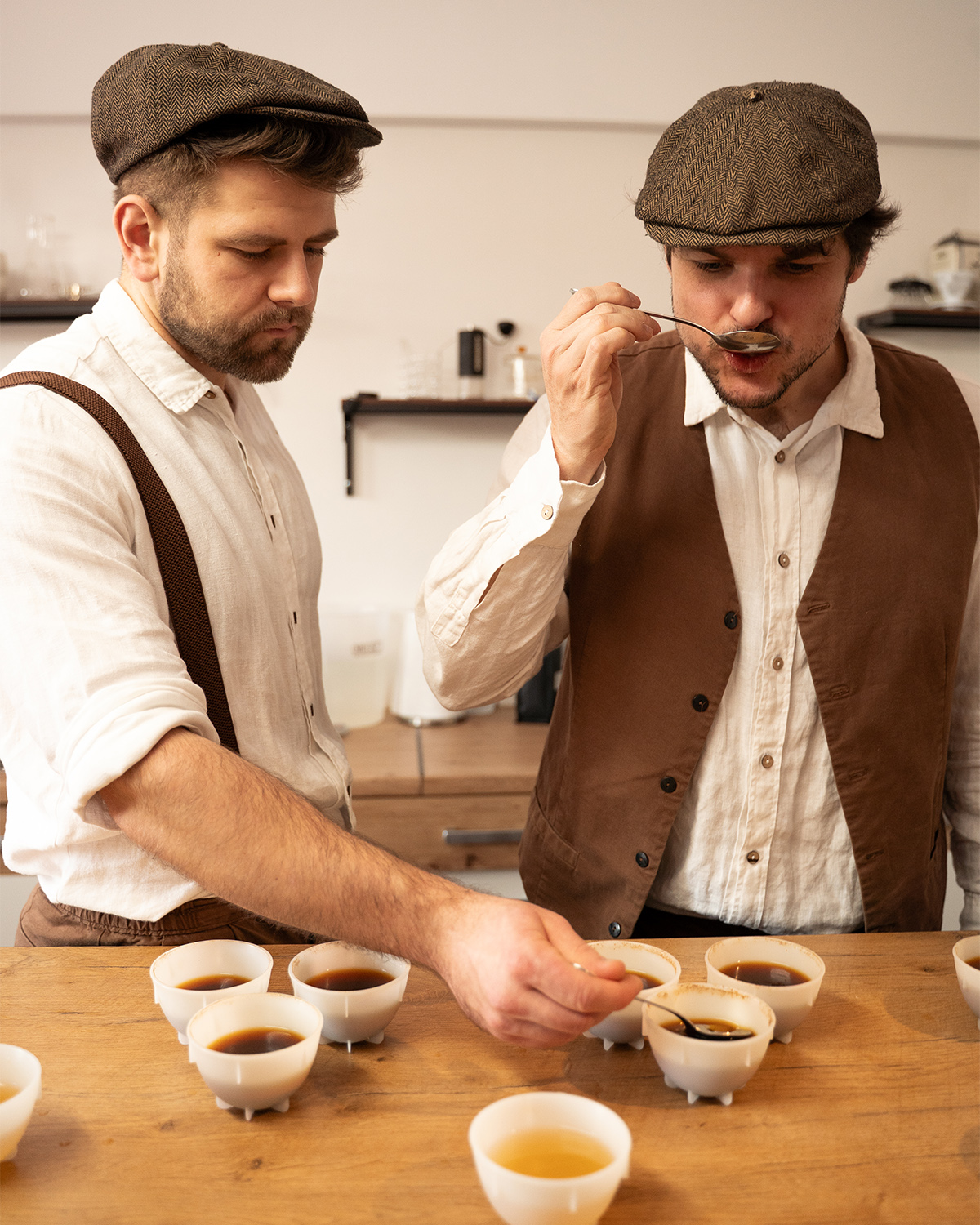
How can we explore coffee without pressure?
A simple exercise involves two people tasting the same brew. First, each person writes down their own observations; only then do you compare descriptions. It is worth reading the label after recording your initial impressions, so that you begin with your own associations.
There is no need for an elaborate tasting form. Four questions are enough:
• What does the aroma remind me of?
• How noticeable are the sweetness, sourness and bitterness?
• What texture does the coffee have – does it feel light or fuller-bodied?
• What lingers after swallowing, and is it pleasant?
You can use broad categories such as fruity, floral, nutty or roasted. More specific descriptions can come later. This is also the approach the SCA recommends when working with the flavour wheel.
Comparing your answers reveals which characteristics you both notice, where your descriptions differ and what each of you enjoys most. The aim is to get to know the coffee and your own preferences better.
Your own impressions have value, too
Our perception of coffee brings together the properties of the drink, our individual sensory abilities, the way we describe sensations and our personal judgement. This is why tasting together can produce different observations that are still useful.
Exploring aromas and tasting attentively can help us develop a more precise vocabulary. But we do not need to identify every note on the label to enjoy coffee and make choices that suit us better. A good starting point is to notice what we actually perceive – and what gives us pleasure.
