


A crisp, buttery base, a generous layer of apples and a fine, golden crumble topping. We show you how to make a Polish apple pie that slices neatly once cool, with tender pieces of fruit still visible in the filling.
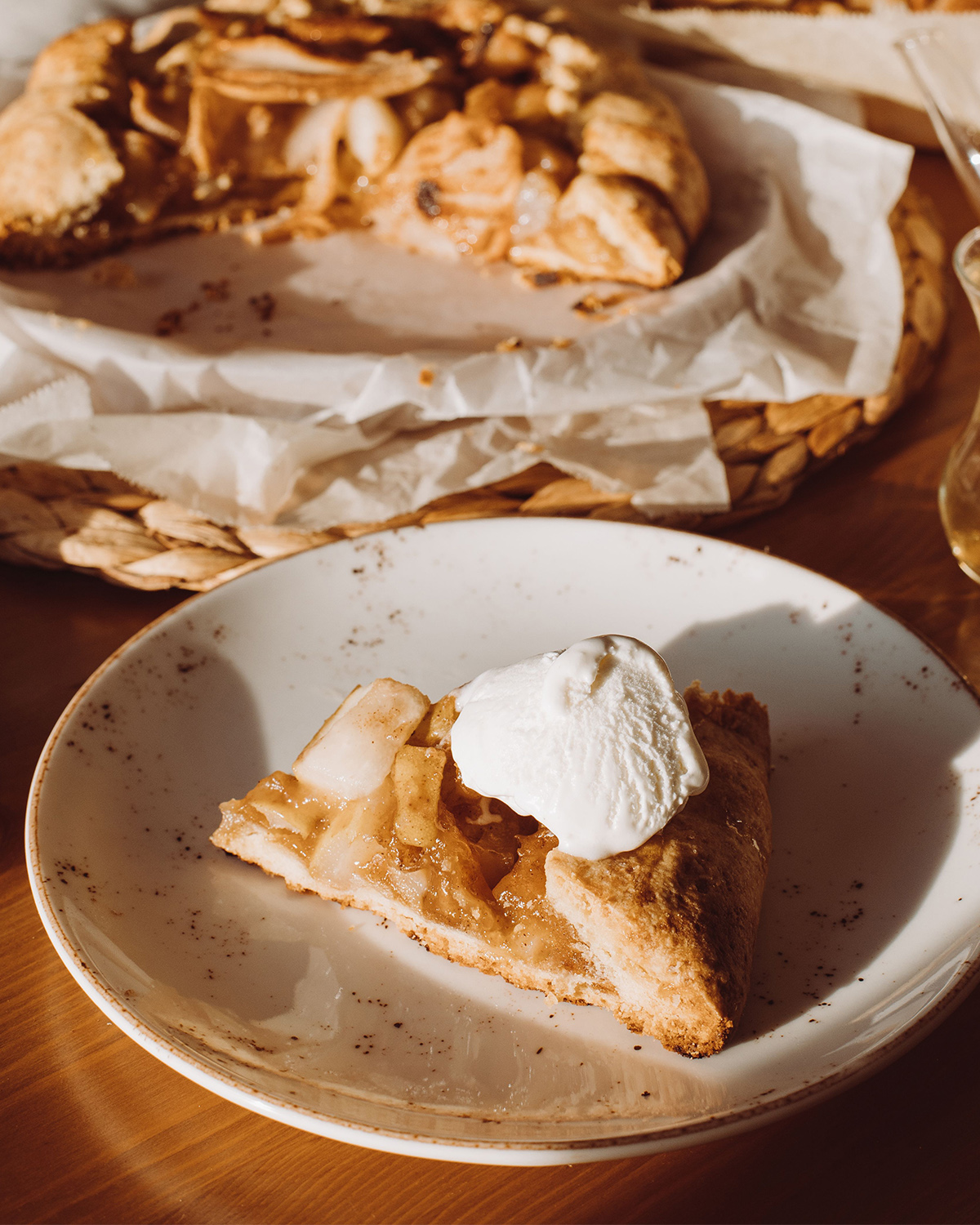
Pears and cinnamon are a pairing we return to every autumn. Baked in buttery pastry and served with vanilla ice cream, they make a lovely dessert to enjoy with an afternoon coffee, especially as the weather turns cooler.
This rustic tart, known as a galette, needs no special tin. Simply roll out the pastry on baking parchment, arrange the fruit and fold the edges inwards. The uneven folds give it a relaxed, homemade finish.
Slice the pears thinly and arrange them in fans, leaving the centre uncovered. Serve the finished tart with vanilla ice cream and our Midday Chill coffee.
Pear tart – ingredients
Makes one tart approximately 24–25 cm across, serving 6–8.
Buttery pastry
188 g plain flour,
113 g cold unsalted butter,
25 g granulated sugar,
¼ teaspoon fine salt,
60 ml very cold water, plus a little more if needed,
a little flour for rolling out.
Pear filling
500 g pears, weighed after peeling and coring,
50 g granulated sugar,
15 g plain flour,
1 teaspoon lemon juice,
¾ teaspoon ground cinnamon,
a small pinch of salt.
To finish and serve
1 egg,
1 tablespoon milk,
vanilla ice cream – one scoop per serving.
You will only need some of the egg and milk mixture to brush the pastry edges. Use a 5 ml measuring teaspoon and a 15 ml tablespoon.
Equipment
You will need scales, a rolling pin, a sharp knife, a baking tray, baking parchment and a pastry brush. A wide cake slice is useful for serving.
Which pears should you use?
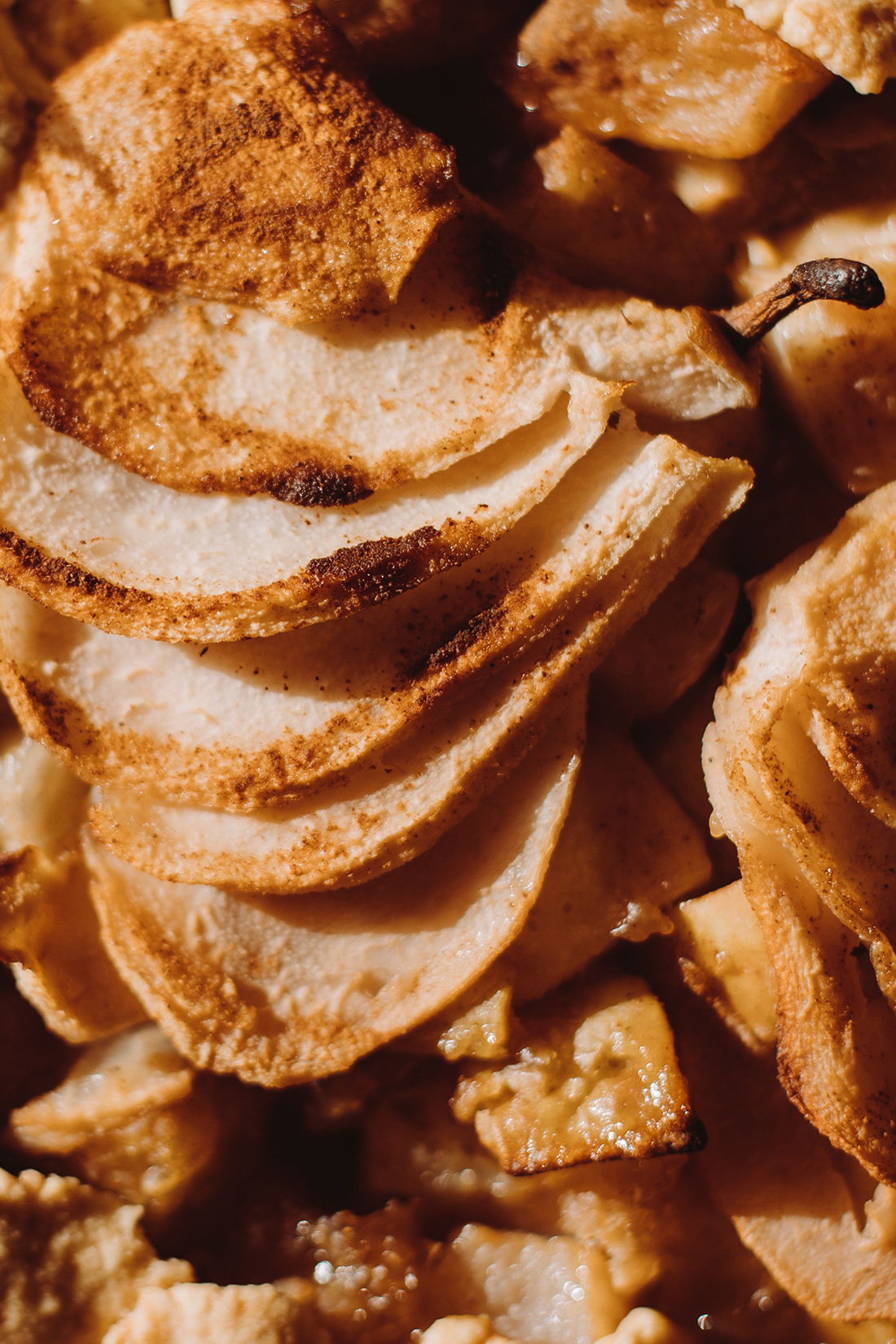
Choose ripe pears that are still firm. The slices should hold their shape as you cut them and separate gently into a fan. Very soft, particularly juicy fruit is harder to arrange, and its juices may make the pastry too wet.
Ripeness matters more than the name of the variety. Weigh out 500 g of fruit after peeling and removing the cores.
How to make a rustic pear tart
Step 1: Make the pastry
Mix the flour, sugar and salt. Add the cold butter, cut into cubes. Cut it into the flour with a knife or briefly rub it in with your fingertips, leaving small, visible pieces of butter. Do not work it all into a fine, sandy mixture.
Pour in 60 ml very cold water and mix with a fork. Squeeze a little pastry in your hand – it should hold together. If it still crumbles, add more water a teaspoon at a time. Briefly bring the pastry together, flatten into a disc, wrap and refrigerate for 1 hour.
Step 2: Prepare the pears
Peel the pears, halve them lengthways and remove the cores. Cut the halves into slices approximately 4–5 mm thick, keeping them together in groups so you can fan them out later. Gently sprinkle with the lemon juice.
In a small bowl, mix the sugar, flour, cinnamon and salt. Add this mixture to the fruit only as you arrange it on the pastry, so the pears do not release too much juice beforehand.
Step 3: Roll out the pastry
On lightly floured baking parchment, roll the pastry into a circle approximately 32 cm across and 3–4 mm thick. If it is very firm from the fridge, leave it on the worktop for a few minutes first. It should still feel cool.
Transfer the pastry, on its parchment, to a baking tray.
Step 4: Arrange the fruit and fold the edges
Gently spread each group of pear slices into a fan and sprinkle with the sugar, flour and spice mixture, including between the slices. Use all the mixture.
Arrange the fans close together, pointing in different directions. Avoid piling the fruit too high. Leave a border of approximately 4 cm.
Fold the pastry edges over the pears, making pleats as you go. Gently seal any cracks to help keep the juices inside as the tart bakes. Leave the centre uncovered.
Step 5: Chill the tart
Beat the egg with the milk and lightly brush the pastry edges. Do not pour the mixture over the fruit or onto the parchment.
Refrigerate the tart for 20 minutes. Meanwhile, preheat the oven to 200°C using conventional top and bottom heat, with the fan off. Chilling helps the pastry hold its shape and reduces butter leakage.
Step 6: Bake the tart
Place the tray on a shelf just below the centre of the oven. Bake for approximately 35–40 minutes, until the pastry is golden, the pears are tender and the filling juices are bubbling gently.
Test the fruit with a thin knife – it should slide in without much resistance. Baking time will depend on your oven and the ripeness of the pears. If the edges brown too quickly, loosely cover them with foil and continue baking until the centre is ready.
How to serve the pear tart
Leave the tart to stand for approximately 15–20 minutes after taking it out of the oven. The filling will settle slightly while the tart stays warm.
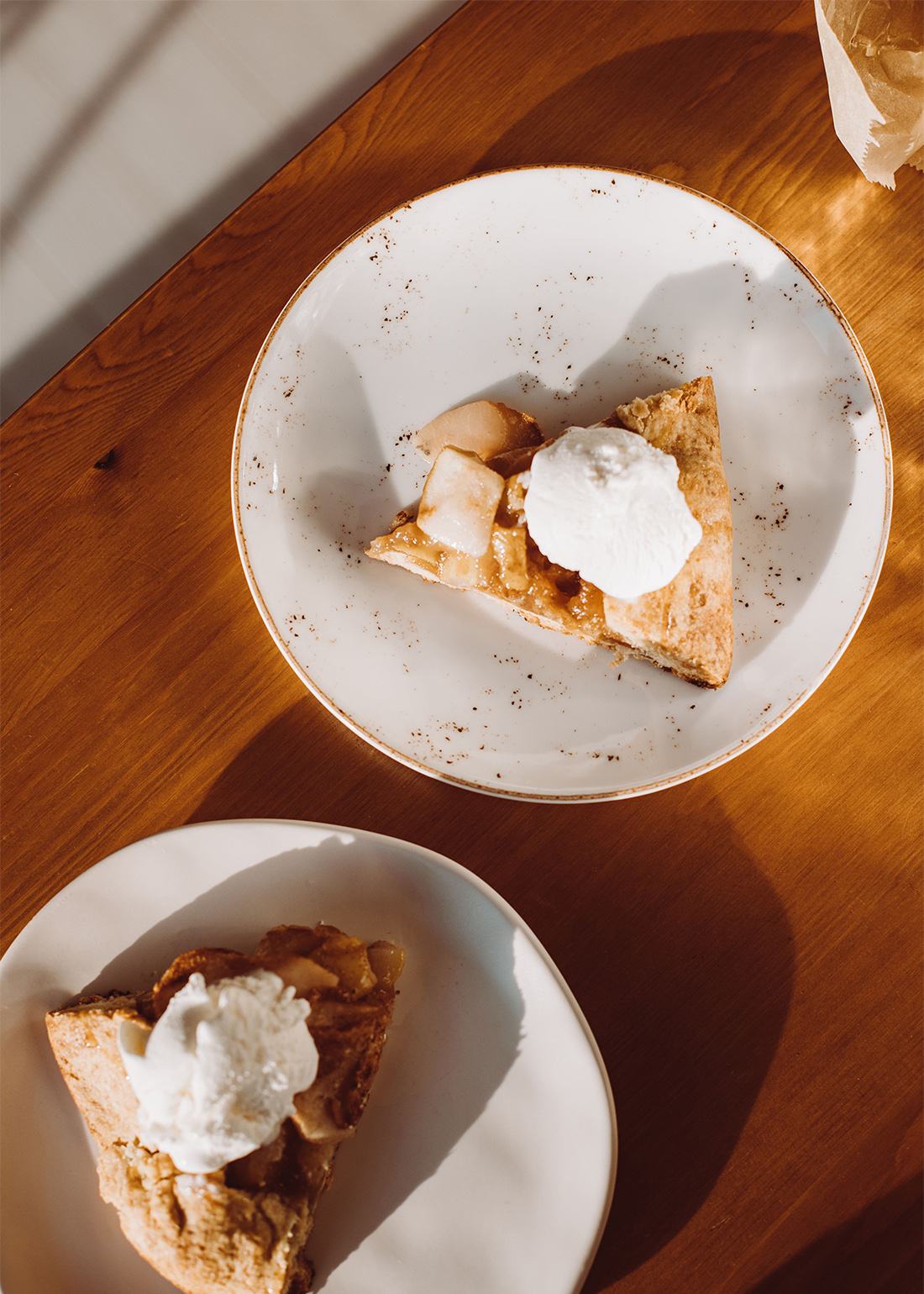
Cut into wedges. Top each portion with a scoop of vanilla ice cream, leaving some of the pears visible. Add the ice cream just before serving so it starts to melt gently over the warm fruit.
There is no need for a sauce or a dusting of icing sugar. The pear fans, golden pastry edges and pale scoop of ice cream provide the decoration.
Can you use apples instead of pears?
Yes – you can also make the tart with apples or a mixture of apples and pears, such as 250 g of each. Use a total of 500 g peeled, cored fruit and keep the remaining filling quantities the same.
Cut the apples a little thinner, into slices approximately 3 mm thick, as they may take longer to soften than pears. Test them with a thin knife before removing the tart from the oven. If needed, extend the baking time, covering the browned pastry edges with foil.
Pears are the fruit used in the main recipe. Apples, or a mixture of both fruits, offer another variation on this autumn dessert.
Which coffee pairs well with pear tart?
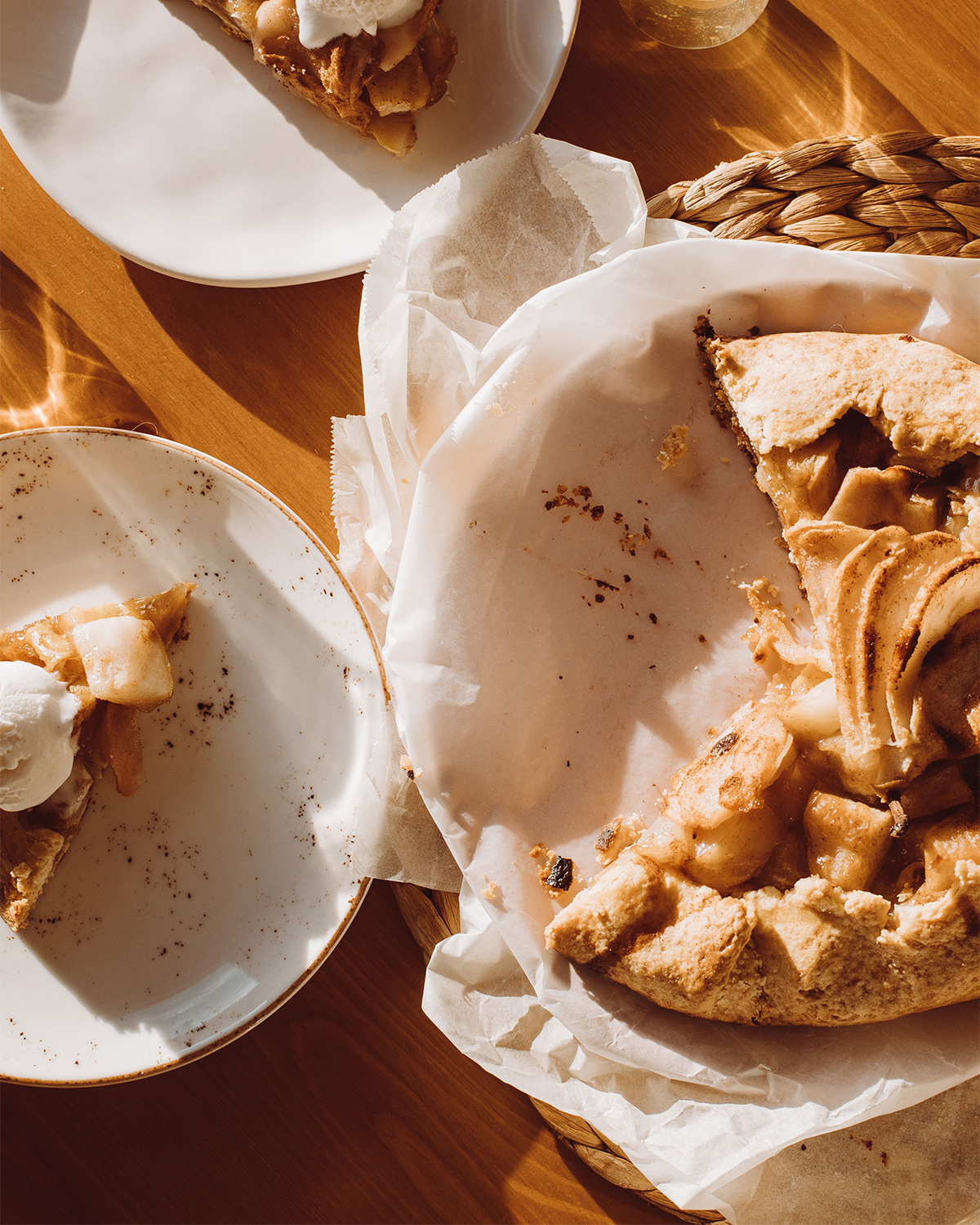
For this dessert, we recommend our Midday Chill – a medium-roasted blend of Arabicas from Brazil and Guatemala, with tasting notes of toasted walnut, caramel and rum.
The coffee’s caramel and nut notes complement the buttery pastry and baked pears, while its rum note works well with cinnamon and vanilla ice cream. Serve it as a black Americano, without added sugar.
Serve the coffee alongside the tart. Take a sip first, then a bite of the dessert, and notice how the pairing changes your perception of the flavours.
How to store the tart
The tart is best on the day it is baked, when the edges are at their crispest. Leave any remaining slices to cool completely, then cover and refrigerate, without ice cream, for up to 3 days.
Before serving, you can reheat a slice in the oven at 160°C for approximately 8–10 minutes. Adjust the time to suit the size of the slice. Add a fresh scoop of ice cream once it is on the plate.
