


If you are looking for a simple but impressive crustless cheesecake, without a long list of ingredients, this recipe is for you. It works beautifully both for special occasions and for everyday serving.
Coffee processing and its impact on flavor
While coffee variety and the region where it is grown significantly influence its taste, the processing method — the way coffee cherries are treated after harvesting—is just as crucial. Each coffee cherry consists of multiple layers: the skin, pulp, pectin layer, parchment, and silverskin, all enclosing the actual coffee beans. The goal of processing is to remove these layers while preserving the bean's unique flavors. What are the most common processing methods, and how do they affect the final cup?
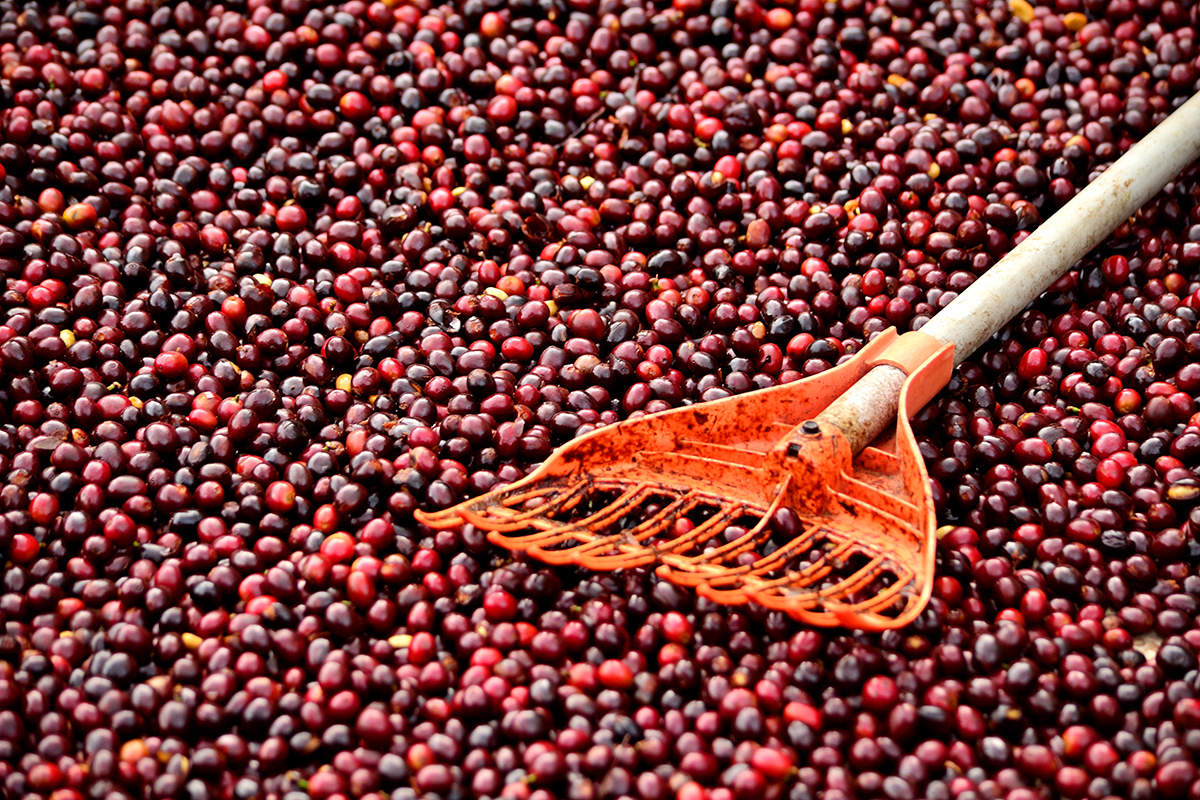 Dry-processed coffee cherries. Photo 88 Graines
Natural (dry) processing
In natural processing, coffee cherries are dried whole, without removing any layers, on raised beds, patios, or mats. This method is commonly used in water-scarce regions like Ethiopia or Yemen, where high temperatures and intense sunlight prevent mold from forming during drying. However, it is not suitable for humid environments, such as many parts of Guatemala.
Once fully dried, the outer skin and parchment are mechanically removed. The beans are then dried further until they reach the desired moisture content.
This process enhances fruity notes in coffee, which are less common in washed coffees. The beans absorb flavors from the drying fruit, resulting in taste profiles featuring blueberry, strawberry, and other bold fruit notes, sometimes with wine-like qualities. These coffees also tend to have a fuller body and lower acidity.
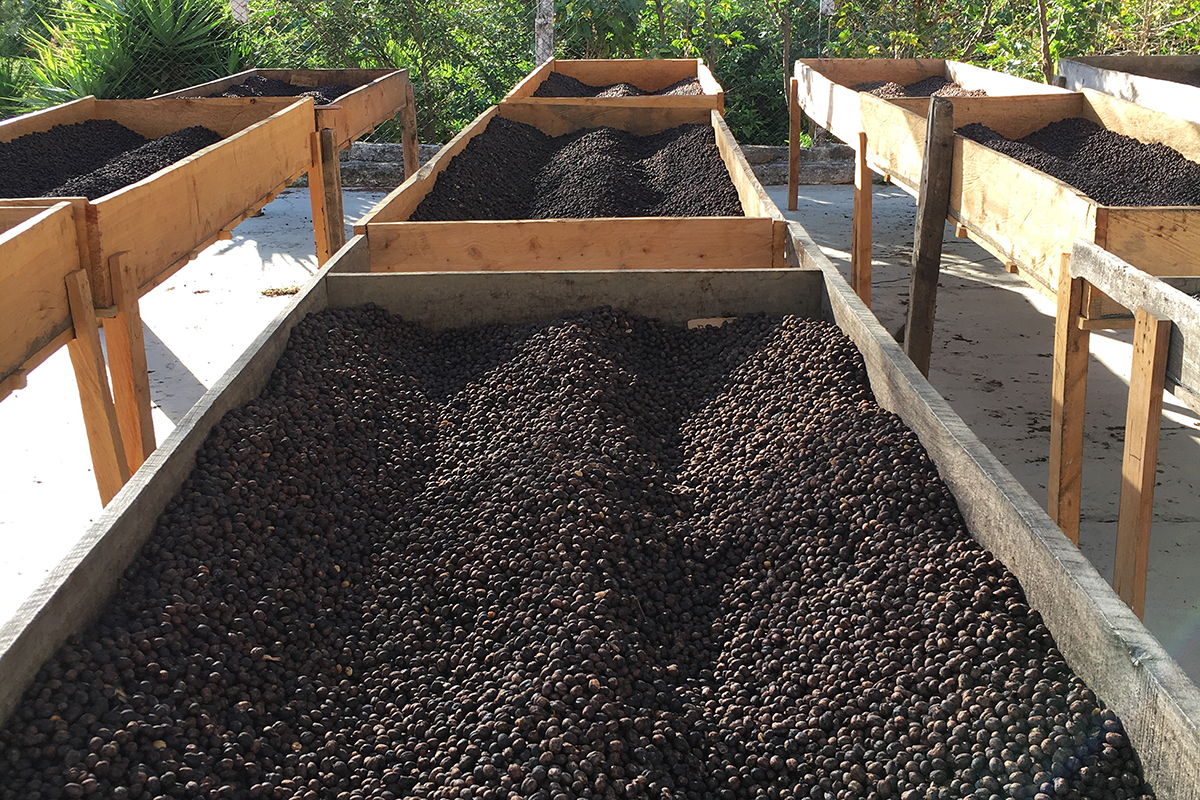 Dry-treated coffee cherries. Photo 88 Graines
Washed (wet) processing
The washed process is one of the most widely used and reliable methods, producing coffee with higher acidity and clarity.
The process begins with the cherries passing through a depulping machine, which removes the outer skin while leaving some pulp on the beans. The beans are then soaked in fermentation tanks, where natural enzymes help break down the remaining pulp. This fermentation stage can last from a few hours to a few days, depending on the climate, equipment, and the producer’s preferences.
 Washing coffee beans. Photo 88 Graines
After fermentation, the beans are thoroughly washed to remove any remaining residue and then dried on raised beds or in mechanical dryers.
This method typically results in a clean, crisp cup with pronounced acidity and bright flavors, highlighting the bean's origin characteristics rather than processing influence.
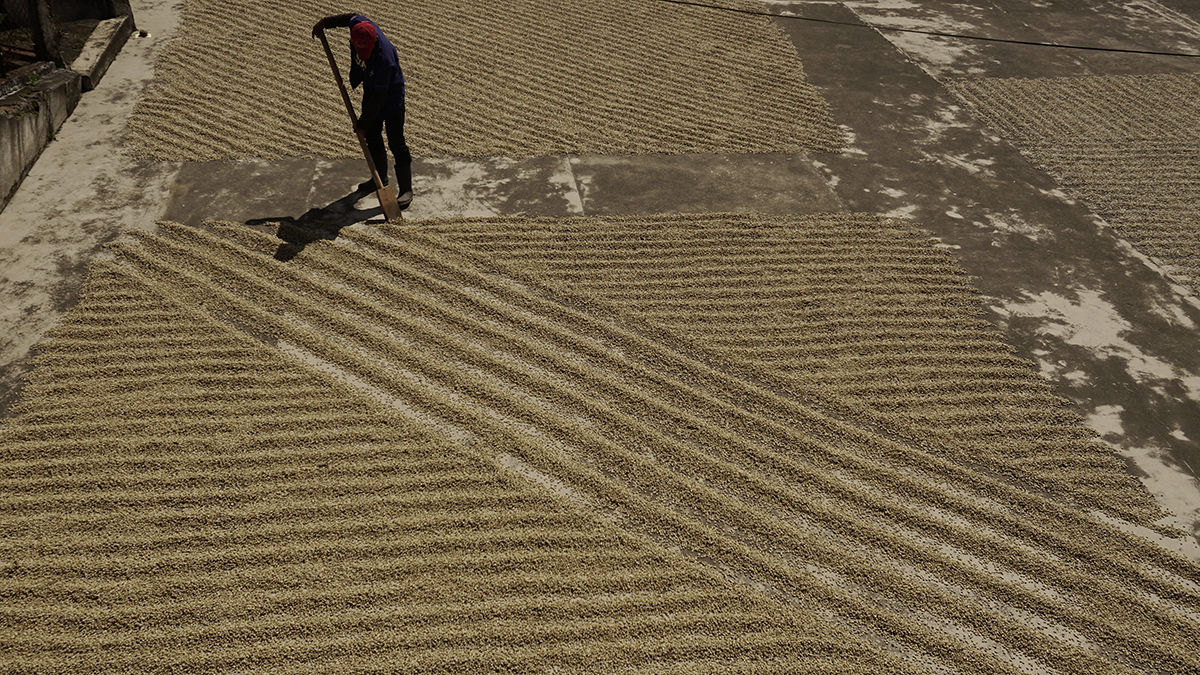 Drying of wet-processed coffee beans. Photo 88 Graines
Honey processing (pulped natural)
Honey processing combines elements of both dry and washed methods. The cherries are depulped, but some mucilage (fruit material) is left on the beans before drying.
This method was developed to reduce water usage compared to washed processing while still producing high-quality coffee. Over time, farmers have refined this process to create specific taste profiles by controlling how much mucilage remains on the beans.
There are different types of honey processing, categorized by the amount of fruit left on the bean:
- White honey – minimal mucilage, closer to washed coffee
- Yellow honey – slightly more mucilage, balanced sweetness
- Red honey – moderate fruit content, rich body
- Black honey – most mucilage left, intense sweetness and complexity
Honey-processed coffees tend to have higher sweetness, moderate acidity, and a fuller body compared to fully washed coffees.
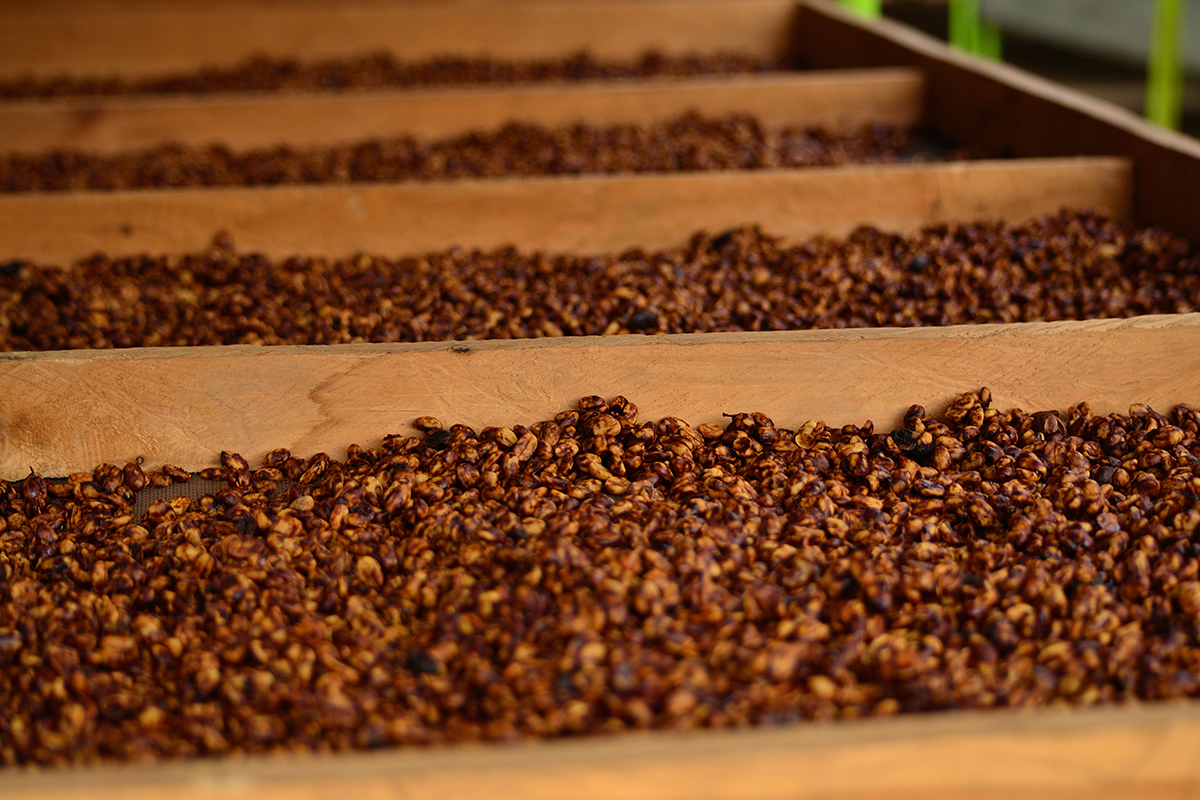 Honey-treated dried coffee cherries. Photo 88 Graines
Processing methods by country
Coffee-producing countries often have their own distinct processing techniques that contribute to their coffee’s signature flavor.
- Kenya – Uses an extended fermentation stage followed by post-fermentation soaking, which enhances acidity and brightness.
- Brazil – Known for pulped natural processing, a middle-ground between washed and natural methods, producing low-acidity, nutty coffees without strong fruit notes.
- Sumatra (Indonesia) – Uses wet-hulling (Giling Basah), where beans are hulled while still wet, giving them a unique earthy profile with low acidity.
Which processing method is best?
There is no single "best" method—it depends on the coffee variety, the producer’s goals, and consumer preferences. The diversity of processing techniques allows us to enjoy a wide range of flavors, from crisp and floral washed coffees to deep, fruity natural-processed beans.
