


If you are looking for a simple but impressive crustless cheesecake, without a long list of ingredients, this recipe is for you. It works beautifully both for special occasions and for everyday serving.
Coffee bags in the speciality segment usually carry far more information than supermarket coffee packaging. If you have mostly bought coffee from supermarkets so far, a speciality coffee label can seem slightly overwhelming at first. On a standard supermarket coffee bag, you will usually find the best-before date, information on whether the coffee is ground or whole bean, and sometimes a declared intensity level. On speciality coffee bags, however, you will often come across terms such as single origin, speciality coffee, roast date, tasting notes, processing method, altitude, botanical variety or recommended brewing method.
So what do these details actually mean? Are all of them useful? Does each one really tell us something important? And what should you genuinely look at when choosing coffee?
What information is essential on a coffee bag?
It is worth starting with one basic point: some of the information on a coffee bag is mandatory and required under food labelling regulations. In other words, certain details simply have to be there. Alongside them, however, you will often find additional information — not legally required, but still highly useful. This is exactly what allows a speciality coffee label to tell us much more about the product.
Reading a coffee label is not about looking for as many impressive-sounding terms as possible or trying to memorise every industry phrase at once. It is more about understanding what is on the bag, knowing how to use that information, and choosing coffee more consciously — with a clearer idea of what to expect before you even open the packaging.
As with any food product, coffee packaging must include specific information required by law. This will usually include, among other things, the product name, net weight, best-before date, producer or distributor details, and in some cases storage instructions or the product ingredients. But that is only one layer of the label. In the world of speciality coffee, there is very often a second layer too: information that is not legally mandatory, but matters a great deal in terms of quality, freshness, transparency and flavour. This is why speciality coffee packaging usually includes more detail than classic supermarket coffee.
A simple rule is useful here: not everything you see on a label serves the same purpose. Some information is there for formal reasons. Other details are there to help you understand the product better.
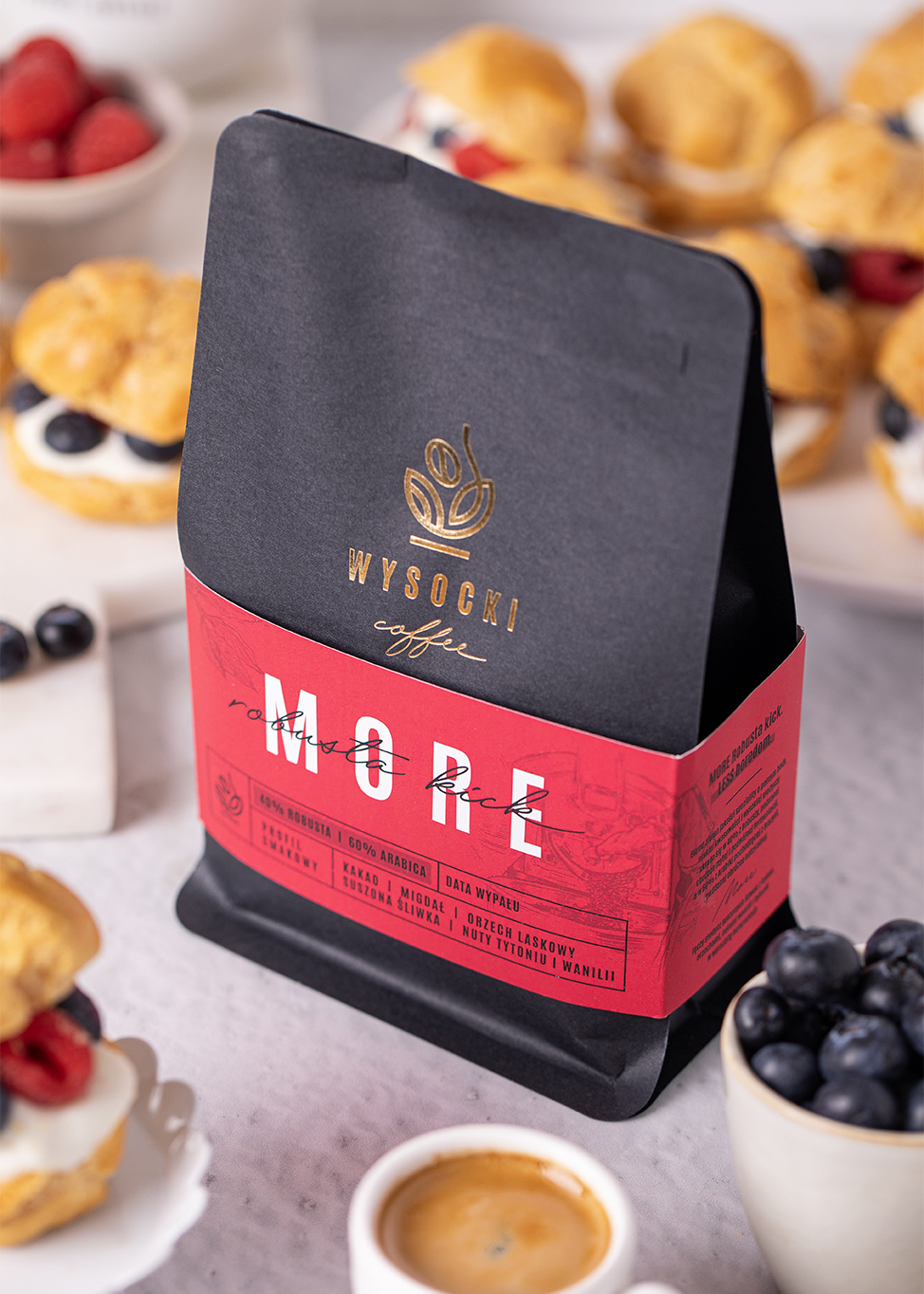
Best-before date and roast date are not the same thing
One of the first things worth learning to notice is the difference between the best-before date and the roast date.
The best-before date tells you how long the product should retain its properties when stored correctly. This is a standard piece of information found on food products. In the case of speciality coffee, however, the roast date is often more useful, because it tells you when the beans were roasted.
Why does this matter? Because coffee changes gradually after roasting. It releases carbon dioxide, rests, develops, and over time loses some of its aroma and freshness. Freshness therefore has real significance in coffee — although this does not mean coffee is best drunk immediately after roasting. Depending on the coffee and brewing method, beans often need several days or even weeks to stabilise and perform better during extraction. So coffee roasted yesterday is not necessarily a good choice if you want to brew it today — coffee that fresh is usually worth resting for at least two weeks. By the same logic, coffee roasted 11 months ago will no longer be at its best, even if it is still safe to consume. Its aroma will be weaker and the flavour will have changed slightly.
From a consumer’s point of view, the roast date simply gives more practical information than the best-before date alone. It helps you understand whether you are dealing with genuinely freshly roasted coffee or with a product that has already been sitting on a shelf for quite some time.
So if you see a roast date on the bag, it is valuable information. Not because coffee without one is automatically bad, but because it makes it easier to judge the coffee’s current stage of freshness — and therefore what flavour and aroma you can reasonably expect from it.
Whole bean or ground coffee?
This is one of the most basic pieces of information on the bag, but also one of the most practically important.
Whole bean coffee keeps its freshness for longer than ground coffee. Once coffee is ground, its surface area exposed to air increases dramatically, which means aroma and volatile aromatic compounds are lost more quickly. For this reason, ground coffee is generally less stable in terms of freshness than whole bean coffee. At the same time, ground coffee is highly practical and makes brewing possible almost anywhere — not only in places where you have access to a grinder.
For those who do have a grinder at home, whole bean coffee is usually the better option, because grinding just before brewing gives more control over flavour and allows you to make better use of the coffee’s potential.
For anyone who does not have a grinder and uses ready-ground coffee, this information still matters. It simply helps you understand what kind of product you are dealing with and what to expect from it.
It is also worth adding that ground coffee does not always have to mean a major compromise on freshness. More and more roasteries now offer ground coffee in smaller portions — in our case, for example, 70 g sachets. This is a very practical solution, because once opened, you use up a small amount of coffee rather than keeping a 250 g or 500 g bag open for many days or weeks. And that matters, because once coffee has been ground, it has a much larger surface area exposed to air than whole beans, so it oxidises more quickly and loses the volatile aromatic compounds responsible for the aroma and flavour of the brew. In simple terms: the longer opened ground coffee remains in contact with oxygen, the more its aroma gradually fades.
An additional benefit is protective-atmosphere packaging. In this process, air is removed from the packaging and replaced with an inert gas, most commonly nitrogen, which helps limit the coffee’s contact with oxygen and slows down the loss of freshness. With our 70 g sachets, there is therefore a double benefit: on the one hand, the small portion means the coffee does not sit open for long and lose aroma unnecessarily; on the other, nitrogen packaging helps protect its freshness for longer. As a result, ground coffee can retain its qualities more effectively, while small, tightly sealed portions offer a convenient solution for people who do not have a grinder but still want to drink coffee as fresh as possible.
What does “speciality coffee” mean?
Speciality coffee is one of those terms that can sound a little like marketing language, but in reality it refers to a specific quality category.
In simple terms, speciality coffee is high-quality coffee assessed according to defined sensory and quality standards. It is not only about how the coffee tastes in the cup, but also about the quality of the raw material, the number of defects, the processing method, consistency and the overall standard of the green coffee lot.
For the consumer, the most important point is that the term speciality coffee usually suggests a completely different approach to the product than in the case of mass-market coffee. It points to greater care around origin, freshness, roast profile and communication of what is actually inside the bag. Of course, this does not mean every speciality coffee will appeal to everyone in the same way. It means, rather, that you are dealing with a product whose quality is taken seriously and whose character is being presented rather than hidden.
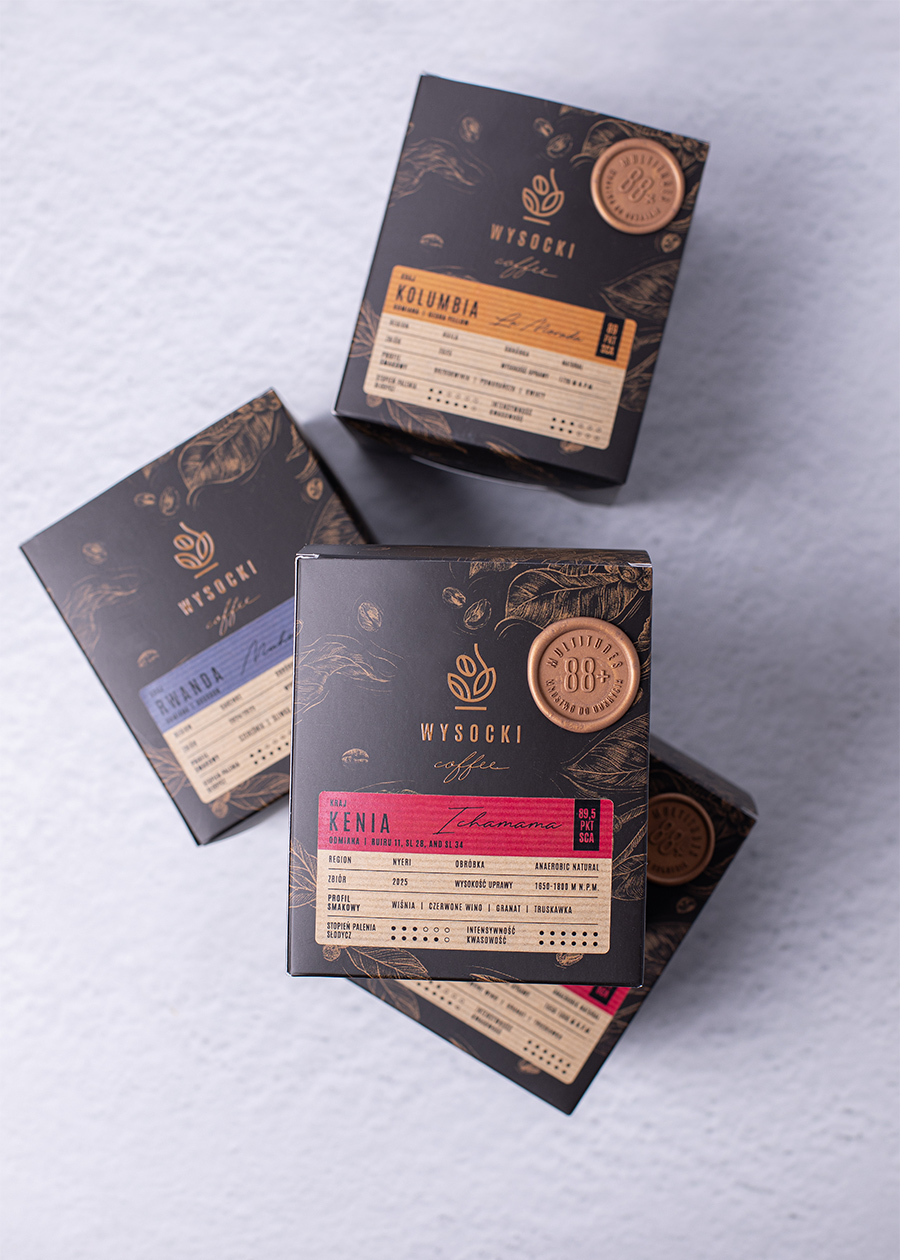
Single origin and blend — what do they actually mean?
Speciality coffee labels often indicate whether a coffee is single origin or a blend.
Single origin means that the coffee comes from one source — most often one country, although sometimes the term is used more precisely and refers to a specific region or even a single farm. This kind of coffee is usually intended to show the characteristics of its place of origin and the individual character of a particular lot more clearly.
A blend, on the other hand, is a mixture of different coffees, created to achieve a particular flavour profile. A blend may combine coffees from different countries, regions or processing methods. Contrary to common oversimplifications, a blend does not have to be inferior. It is simply a different way of creating a coffee product. Many excellent espresso coffees are carefully designed blends.
For the consumer, the most important thing is not the word single origin itself, but the understanding that this information says something about the “construction” of the coffee and how the producer wants to present it. Single origin coffees more often highlight the individual character of a particular bean or lot, while blends more often focus on balance, consistency and a specific flavour goal.
100% Arabica — is it really that important?
For years, the coffee market has strongly reinforced the idea that the words “100% Arabica” are, in themselves, a guarantee of quality. In practice, that is not the case at all — and the matter is more complex.
Arabica and canephora are two different coffee species, not two levels of quality. They differ in origin, genetic structure, the content of certain chemical compounds, growing conditions and agronomic characteristics. Coffea arabica is a self-pollinating species and accounts for most of the world’s coffee production, while Coffea canephora — very often referred to commercially as robusta — is a species with higher productivity and a higher caffeine content.
Arabica and canephora also differ in the chemical composition of their beans. Canephora usually contains more caffeine than arabica, as well as higher levels of certain chlorogenic compounds. In scientific literature, these chemical differences are among the best described and most reliably confirmed distinctions between the two species. As a broad indication, arabica usually contains around 0.8–1.4 g of caffeine per 100 g of beans, while canephora contains around 1.7–4.0 g per 100 g, although exact values depend on the specific sample, variety and growing conditions.
These chemical differences also translate into practical and agronomic characteristics. Canephora is generally more resistant to high temperatures, diseases and pests, and performs better at lower growing altitudes. Arabica usually requires more specific environmental conditions and is less resilient, but it has long played a central role in the quality and speciality segment. The Specialty Coffee Association describes canephora as a species distinguished, among other things, by higher productivity and higher caffeine content, and also as one of the diploid parent species of arabica.
From the consumer’s point of view, however, the most important thing is this: the phrase “100% Arabica” only tells you which species you are dealing with. It does not tell you everything about the coffee’s quality. Two coffees labelled as 100% Arabica can differ in almost every other respect: origin, botanical variety, processing method, freshness, roast profile and final flavour in the cup. Information about the species is therefore useful, but it only really becomes meaningful when combined with other details.
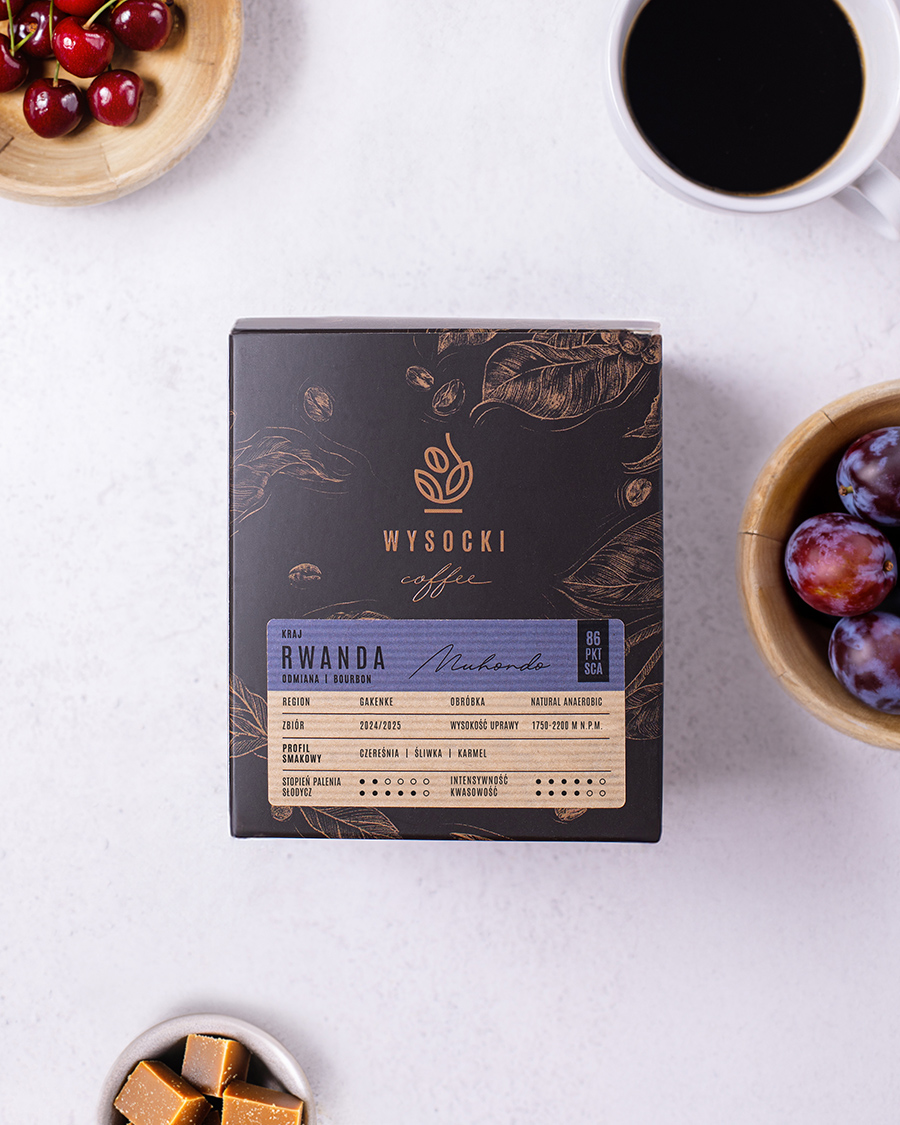
What is a botanical variety, or varietal?
Once we understand that arabica and canephora are species, it becomes easier to understand the next level of information on the label: the botanical variety, often referred to in English as a variety or varietal. A botanical variety is simply a more specific group of plants within a given species, distinguished by a particular set of inherited characteristics. In coffee, this means that within arabica there are many different varieties, which may differ in plant structure, yield size, disease resistance, ripening time and sensory potential. The SCA and botanical sources emphasise that this is where the great diversity of the coffee world really begins.
In practice, this means arabica is not one uniform “coffee”. It includes many different varieties, such as Typica, Bourbon, Caturra, Catuai, SL28, SL34 and Gesha. Each has its own breeding history and its own set of agronomic characteristics. Some varieties are valued for high sensory quality, others for resistance or yield, and others for a combination of these traits. This is why roasteries increasingly include the variety name on the label: not to sound more professional, but to describe the raw material more precisely.
It is worth remembering, however, that the variety name alone still does not give the full picture. The potential of a given variety is only revealed in combination with terroir, altitude, climate conditions, harvesting method, processing and roasting. In other words, the varietal is an important part of a coffee description, but it does not function in isolation. It is another valuable clue on the label — especially for a more conscious coffee drinker — but not the only factor determining what you will find in the cup.
Examples of varieties you may see on coffee labels
Among the most commonly encountered arabica varieties are Typica and Bourbon — historically important genetic lines from which many later varieties are descended. Caturra and Catuai are also common, especially in Latin America, as are SL28 and SL34, which are particularly associated with Kenya. In the more prestigious and competition-focused segment, Gesha has also gained major recognition and is associated with very high quality potential and a distinctive sensory profile.
So if a botanical variety appears on the label alongside country of origin, processing method and altitude, it is not an unnecessary detail. It is information that helps describe the raw material more accurately and better explain where certain characteristics in the brew may come from. For a beginner coffee drinker, it does not have to be the most important parameter yet. Over time, however, these are exactly the kinds of details that help build a fuller understanding of coffee and allow you to read labels more consciously.
Country of origin, region, farm — why does it matter?
One of the most characteristic features of speciality coffee labels is detailed information about origin.
A bag may show only the country, such as Ethiopia, Brazil or Guatemala. Sometimes, however, the producer goes a step further and also provides the region, farm name, washing station or cooperative. The more detailed the origin information, the more we can say about the coffee itself.
Why does this matter? Because coffee is not a uniform product. Its character is influenced by climate, altitude, soil, botanical variety, harvesting method and local processing practices. This is why coffees from different countries — and even from different regions within the same country — can taste completely different.
At the same time, it is worth remembering that an exotic-sounding name does not automatically make a coffee exceptional. Origin information is valuable not because it sounds impressive, but because it helps us understand the product’s context and increases transparency.
Altitude — why is it shown on the bag?
Altitude affects the speed at which coffee cherries ripen and, indirectly, the density of the bean and its quality potential. Coffees grown at higher altitudes often ripen more slowly, which can support greater complexity and better structure in the cup. For this reason, information about metres above sea level is not a technical ornament, but a real element of the raw material description.
Processing method: washed, natural, honey — what does it tell you?
The processing method has a major impact on how coffee tastes and how it is perceived in the cup. Processing describes how the seed was separated from the fruit pulp and prepared for drying.
The most common terms are washed, natural and honey, although the world of speciality coffee now includes an increasing number of new methods and experiments. Washed coffees are usually associated with a cleaner and more transparent profile. Natural coffees, dried inside the whole fruit, often bring more fruit character, sweetness and fuller body. Honey processing sits somewhere in between, with part of the fruit mucilage left on the seed during drying.
The name of the processing method alone can already tell you quite a lot about the likely direction of the flavour profile. That is why it is worth paying attention to it, especially as labels increasingly include more experimental fermentation and processing methods, which can have a very noticeable impact on the character of the brew.
What does roast level tell you about coffee?
Roast level primarily tells you how the producer wants to present the coffee in the cup. How long and how intensively the coffee was roasted affects flavour, aroma, perceived acidity, bitterness, sweetness and the overall character of the brew. This is why coffee bags include terms such as light roast, medium roast and dark roast, and sometimes more practical descriptions such as filter roast, espresso roast or omniroast.
In simple terms, lighter roasts usually reveal more of the bean’s own characteristics — its origin, variety or processing method. They are therefore more often associated with greater clarity, more pronounced acidity and a more complex profile. Darker roasts shift the coffee more strongly towards caramel, chocolate, nutty, roasted or more bitter notes, and the influence of the roasting process becomes more noticeable in the cup.
Roast level also matters for brewing method because it affects how the coffee behaves during extraction. Lighter-roasted coffees often work better for filter brewing, which allows their clarity, acidity and origin-driven nuances to come through. Darker-roasted coffees, on the other hand, are often better suited to espresso, because they extract more readily in a short, intense brew and more often provide greater sweetness, body and a more concentrated flavour.
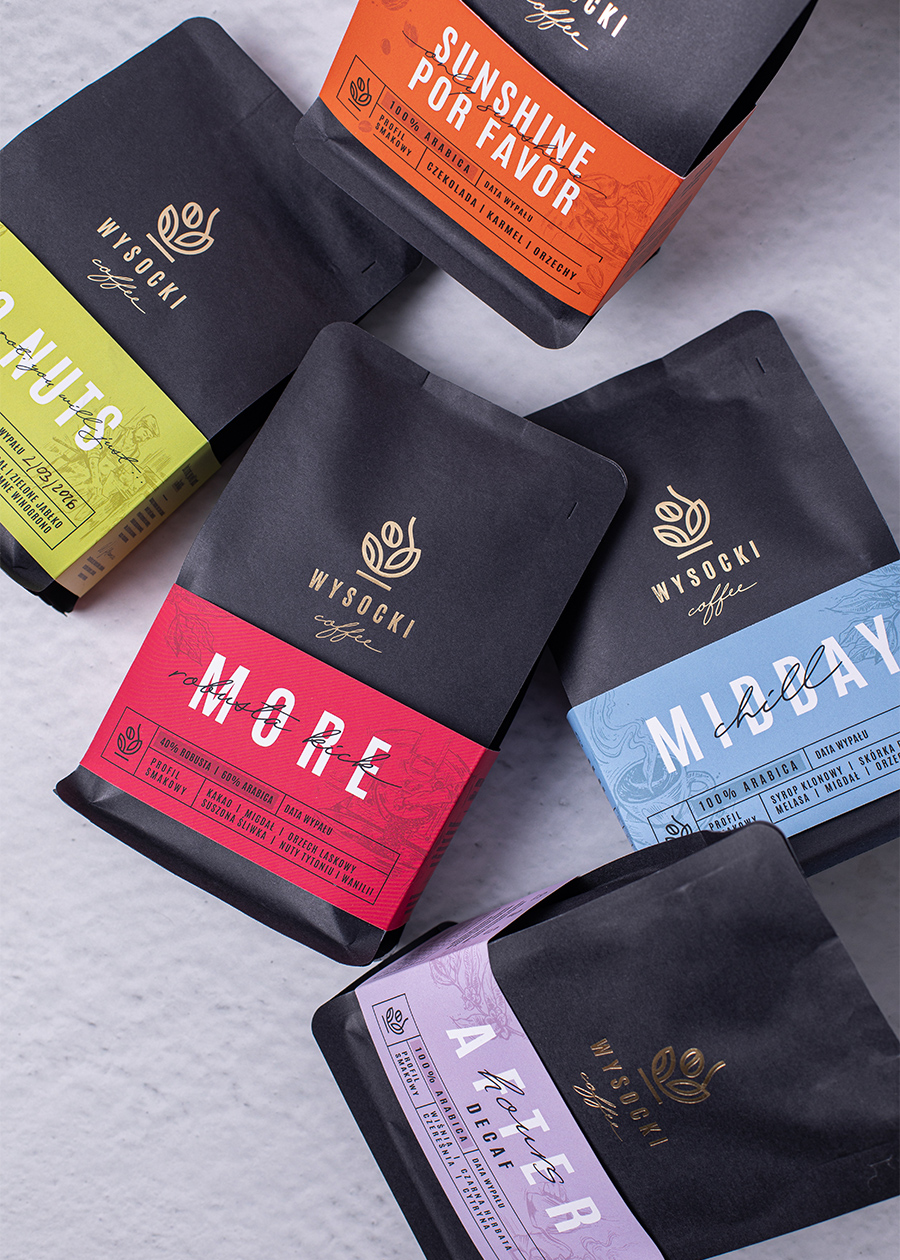
Recommended brewing method — is it worth paying attention to?
Definitely. This is one of the most practical pieces of information on the packaging. If the bag tells you whether the coffee has been roasted with espresso, filter, moka pot or another method in mind, it immediately helps you assess whether it will suit the way you brew coffee every day.
This matters because the roast style and flavour profile are usually developed with a specific extraction method in mind. Coffees intended for filter brewing are often roasted lighter to better show flavour clarity, acidity and origin-driven nuance. Coffees designed for espresso are often roasted a little further, because espresso is a short, intense extraction method and often works better with a profile that gives more sweetness, body and concentrated flavour.
This is not just a marketing addition, but a genuinely useful clue. It makes choosing coffee easier and reduces the risk of disappointment caused by a mismatch between the coffee and your brewing method.
Tasting notes — does coffee really taste of apricot or jasmine?
Terms such as apricot, jasmine, bergamot, strawberry, tea or caramel do not describe ingredients, but sensory impressions the coffee may evoke in the cup. This is a very important distinction. If such notes appear on the bag, it does not mean anything has been added to the coffee. They are an attempt to name the aromas and flavours that may be recognised during brewing and tasting.
This language works in a similar way to wine. It does not describe the recipe, but the sensory profile. Jasmine notes suggest a floral, delicate aroma, not the presence of jasmine in the bag. Apricot, bergamot or caramel also do not mean added ingredients, but flavour and aroma associations that help you imagine the character of the coffee before brewing it.
Well-described tasting notes are one of the most useful parts of a label because they help you quickly understand whether a coffee leans towards a more fruity, floral, chocolatey, sweet or tea-like profile — and everyone has different preferences.
The valve on a coffee bag — why is it there?
The small one-way valve on a bag of whole bean coffee has a very specific function. After roasting, coffee beans gradually release gases, mainly carbon dioxide. The packaging therefore needs to allow those gases to escape while limiting the entry of air from outside.
That is exactly what the valve is for. It lets gases out without the bag having to be opened and helps protect the coffee during storage. It is a simple but important element of fresh coffee packaging, directly connected with the coffee’s stability and aroma retention.
Summary
A coffee label is not a random collection of terms. It tells you about origin, freshness, processing, roast style and the character of the brew. In this way, the bag becomes more than just outer packaging — it becomes a concise, practical description of the coffee itself, helping you choose more consciously and more accurately.
