


If you are looking for a simple but impressive crustless cheesecake, without a long list of ingredients, this recipe is for you. It works beautifully both for special occasions and for everyday serving.
Espresso – symbol włoskiej kawowej kultury i jeden z najbardziej precyzyjnych sposobów Espresso – a symbol of Italian coffee culture and one of the most precise ways to extract coffee we know – typically means a short brew time, around 9 bars of pressure, and a signature crema. To make a drink like that, you need a machine capable of generating and holding the right pressure, temperature, and water flow through coffee that’s been properly ground and tamped. As you can imagine, that’s no small feat. So how did it happen – when did the first patents appear, and how did we get to the machines we use today? Let’s take a chronological look at the key milestones along the way.
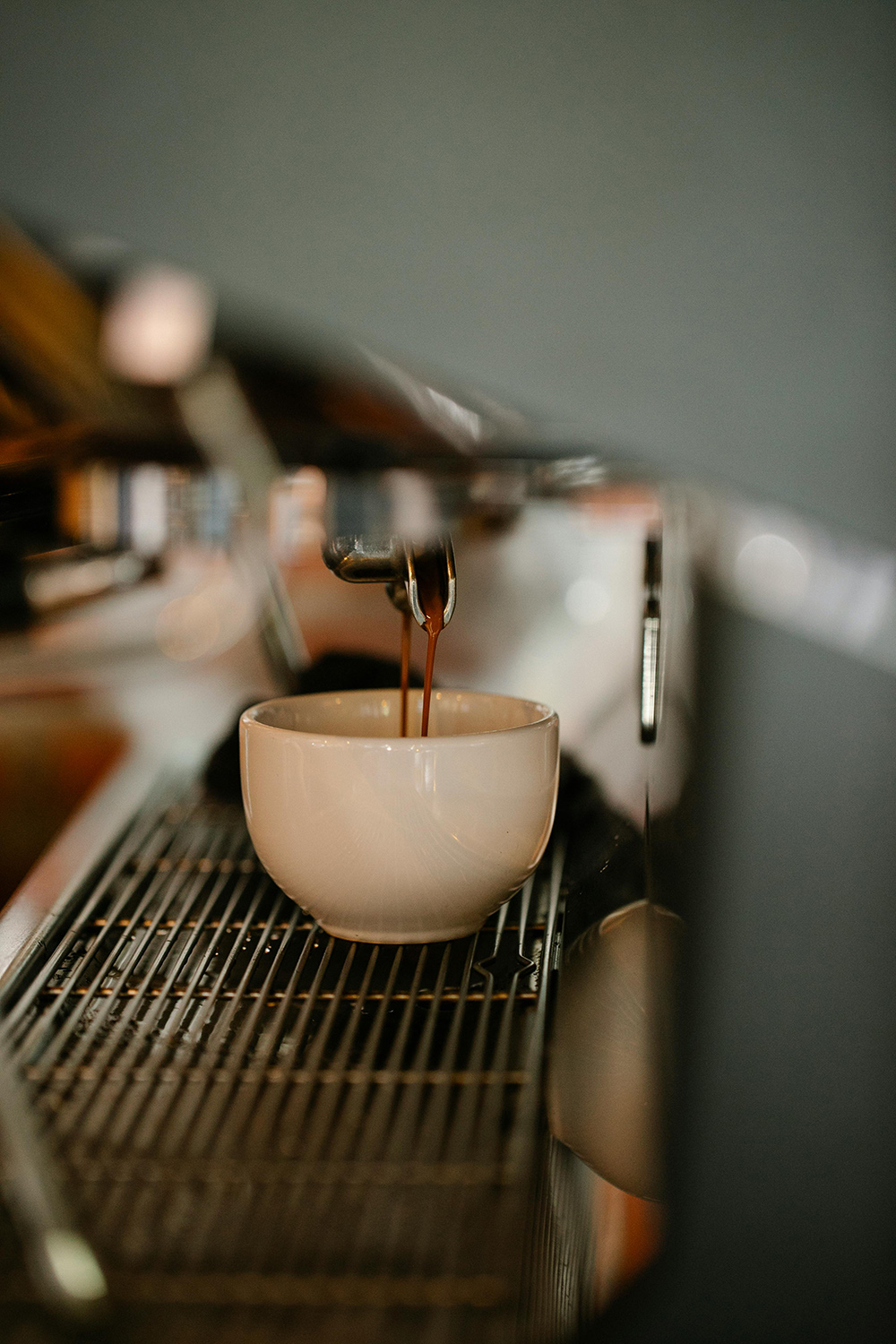
The beginnings of espresso machines
The history of espresso machines reaches back to the late 19th century and is closely tied to industrialisation, the rise of steam technology, and a growing demand for fast, efficient coffee service in cafés, hotels, and at exhibitions. Over more than 140 years, these machines have evolved from primitive, low-pressure steam devices into sophisticated, computer-controlled systems that let baristas shape the flavour profile of every cup with remarkable precision.
The evolution of espresso machines shows how successive technological breakthroughs – higher pressure, better temperature control, automation, and eventually flow profiling – transformed not only the quality of espresso itself, but the entire global specialty coffee scene.
It all began in Turin in 1884. On 16 May, Angelo Moriondo – an entrepreneur and hotel and restaurant owner – was granted patent no. 33/256 for a device titled “New steam apparatus for the economical and instantaneous confection of coffee beverage.” It was the first machine we can reasonably describe today as a precursor to the espresso machine.
Moriondo’s device consisted of a large, sealed water tank heated by steam from a boiler. The steam created pressure that pushed hot water through a chamber filled with a large amount of ground coffee, and the brewed coffee was then dispensed into cups via taps. Moriondo designed the machine primarily for high-volume service at exhibitions and in large venues his prototype was shown, among other places, at the General Exhibition in Turin in 1884.
Although Moriondo’s patent is often seen as the starting point of espresso-machine history, the device had little in common with modern espresso. The pressure generated by steam was only around 1–1.5 bar, far below today’s ~9-bar standard. Extraction was long, the water was extremely hot (often above 100°C), and the drink resembled a very strong, over-extracted brewed coffee rather than a concentrated espresso topped with crema. The machine was also enormous, difficult to operate, and not suited to quick, made-to-order single servings.
Even with these limitations, Moriondo’s invention pointed the way forward: combining steam and pressure could dramatically speed up coffee brewing compared with traditional methods. That idea went on to inspire other inventors in the early 20th century to keep developing the technology.
In the years that followed, similar prototypes appeared in various countries, but none entered true mass production. The first major commercial breakthrough wouldn’t come until the early 1900s, when Luigi Bezzera entered the picture.
Commercialisation and the first improvements in espresso machines
The first real commercial breakthrough came around 1901, when the Milanese mechanic Luigi Bezzera patented a set of improvements. Starting from Moriondo’s concept, Bezzera introduced several key changes that made it possible to brew coffee quickly and practically as single servings.
The most important innovations in Bezzera’s design included:
- portafilters – separate coffee handles with a bayonet-style locking mechanism, still used in most machines today,
- groupheads – dedicated brewing groups,
- the ability to brew to order – one cup at a time rather than in large batches.
Bezzera’s machine was still steam-driven and reached only about 1.5–2 bars of pressure, so the drink still didn’t resemble modern espresso – there was no crema, and the flavour was strong but often bitter and over-extracted. Even so, thanks to single portions and a faster brew cycle, it became genuinely useful in cafés.
In 1903, Desiderio Pavoni bought Bezzera’s patent and founded La Pavoni. By 1905–1906, serial production was underway – and the first commercial machine (often referred to as the Tipo Gigante or “Vittoria Alata”) was presented at the Milan Trade Fair in 1906. Reportedly, Pavoni built around one machine per day in his workshop – monumental copper-and-brass columns with a vertical boiler, often fitted with 4–6 groups.
Other companies followed in Pavoni’s wake:
- Victoria Arduino and La Cimbali in the early 20th century,
- La Marzocco, founded in 1927 in Florence by brothers Giuseppe and Bruno Bambi.
Machines from this period were still steam-based, vertical, and loud – steam would hiss out of safety valves – but they significantly sped up service in bars and cafés. These were the machines that popularised the term “espresso” – coffee prepared quickly, to order.
The 1930s–1950s – the first breakthroughs in pressure and design
The 1930s brought an important ergonomic shift. On 25 February 1939, Giuseppe Bambi of La Marzocco registered a patent for the first machine with a horizontal boiler. Earlier designs used a vertical, column-style boiler with groups arranged around it – which made operation awkward and limited the number of groups that could be added. A horizontal boiler allowed the groupheads to be laid out in a straight line – giving the barista better access and making the machine far more practical for day-to-day work.
The Second World War paused production for several years, but after 1945 the industry returned with renewed momentum. The biggest breakthrough came in the 1940s – and it was driven by Achille Gaggia.
On 5 September 1938, Gaggia patented the “Lampo” system – a steam-free machine in which hot water was pushed through the coffee under pressure using a piston. The real revolution, however, arrived in 1947–1948, when Gaggia introduced a lever mechanism with a large spring. The lever made it possible to generate around 8–9 bars of pressure – roughly the level we associate with espresso today.
The result? For the first time, natural crema appeared – a dense, hazelnut-coloured foam on the surface, created by emulsified coffee oils under higher pressure. The drink became more concentrated, smoother in texture, and richer in flavour and aroma. The 1948 Gaggia Classica (later evolving into both home and professional versions) remains an icon and is widely seen as the moment modern espresso was born.
It was Achille Gaggia who turned espresso from simply a strong coffee into a distinct, recognisable drink – one that quickly took hold not only in Italy, but across Europe.
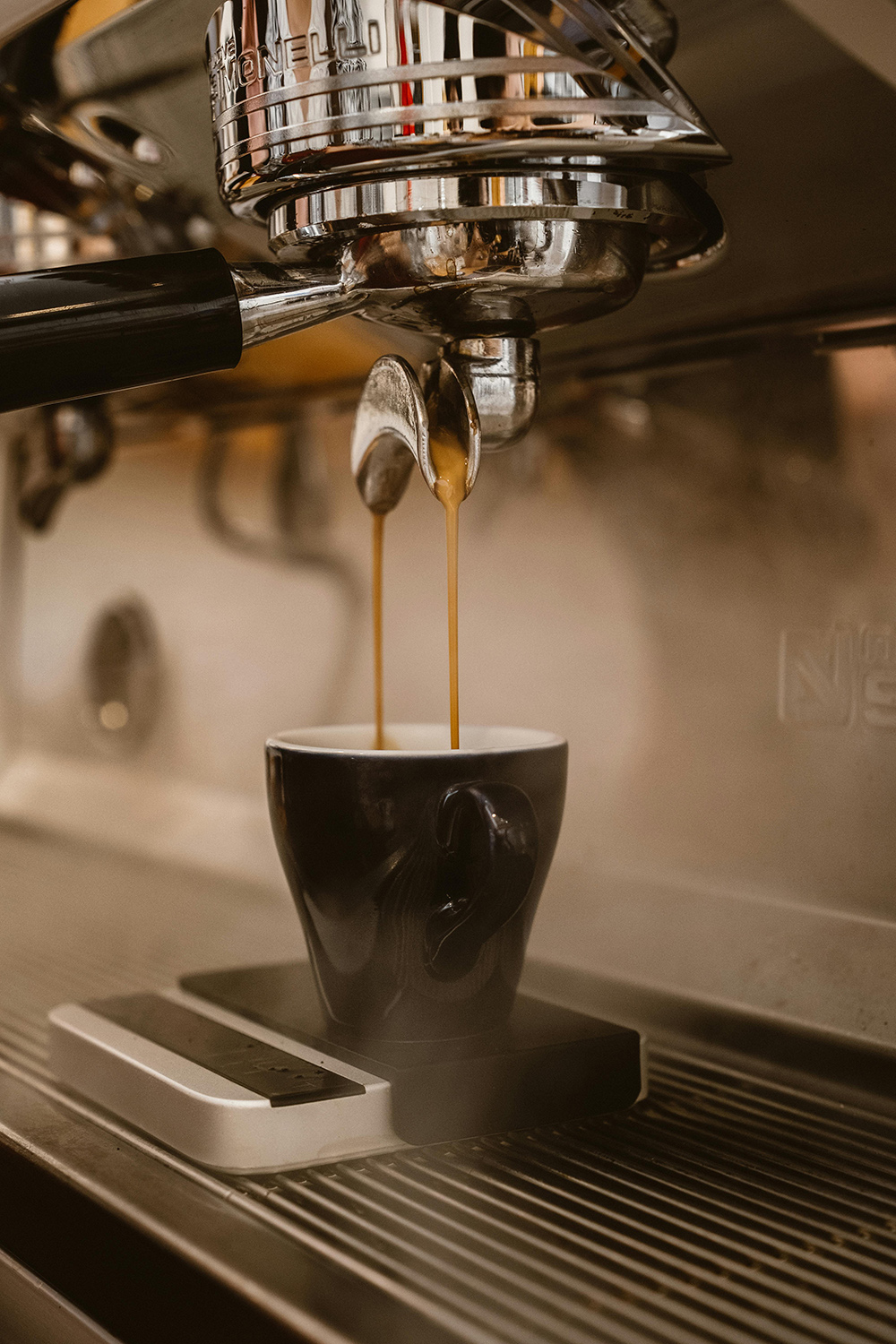
The 1960s–1980s – automation and precision take hold
The 1960s were an era of electrification and automation. In 1961, Faema introduced the E61 – named after the 1961 solar eclipse – a commercially successful semi-automatic machine powered by an electric pump.
Key E61 innovations included:
- a pump that maintained roughly 9 bars of pressure throughout extraction, without the drop-offs typical of lever machines
- a heat exchanger in the boiler – brew water picked up heat from the steam boiler, improving temperature stability
- pre-infusion – gently wetting the puck at low pressure before full pressure is applied
The Faema E61 became a hit in the 1960s – selling in the thousands, especially in smaller bars where the owner often worked solo. It simplified workflow and improved shot-to-shot consistency.
In the 1970s, La Marzocco took things a step further. In 1970, the company introduced the GS (Gruppo Saturo) – an early machine built around two separate boilers:
- one for steam and hot water
- one dedicated to brewing (the brew boiler)
This setup made brew temperature far easier to control – without fluctuations caused by steaming – and allowed baristas to pull shots and steam milk at the same time without compromise. The GS also used saturated groupheads in stainless steel – an approach that remains common in top-tier machines today.
In the 1980s, electronic temperature control began to appear. Baristas could set a target temperature (for example, 92–94°C) and keep it far more stable than before. That level of control helped pave the way for specialty coffee – where precision extraction matters if you want to highlight subtle flavour differences.
Over this period, espresso machines moved from purely mechanical designs to semi-automatic systems with increasingly sophisticated electronics – the foundation for modern machines.
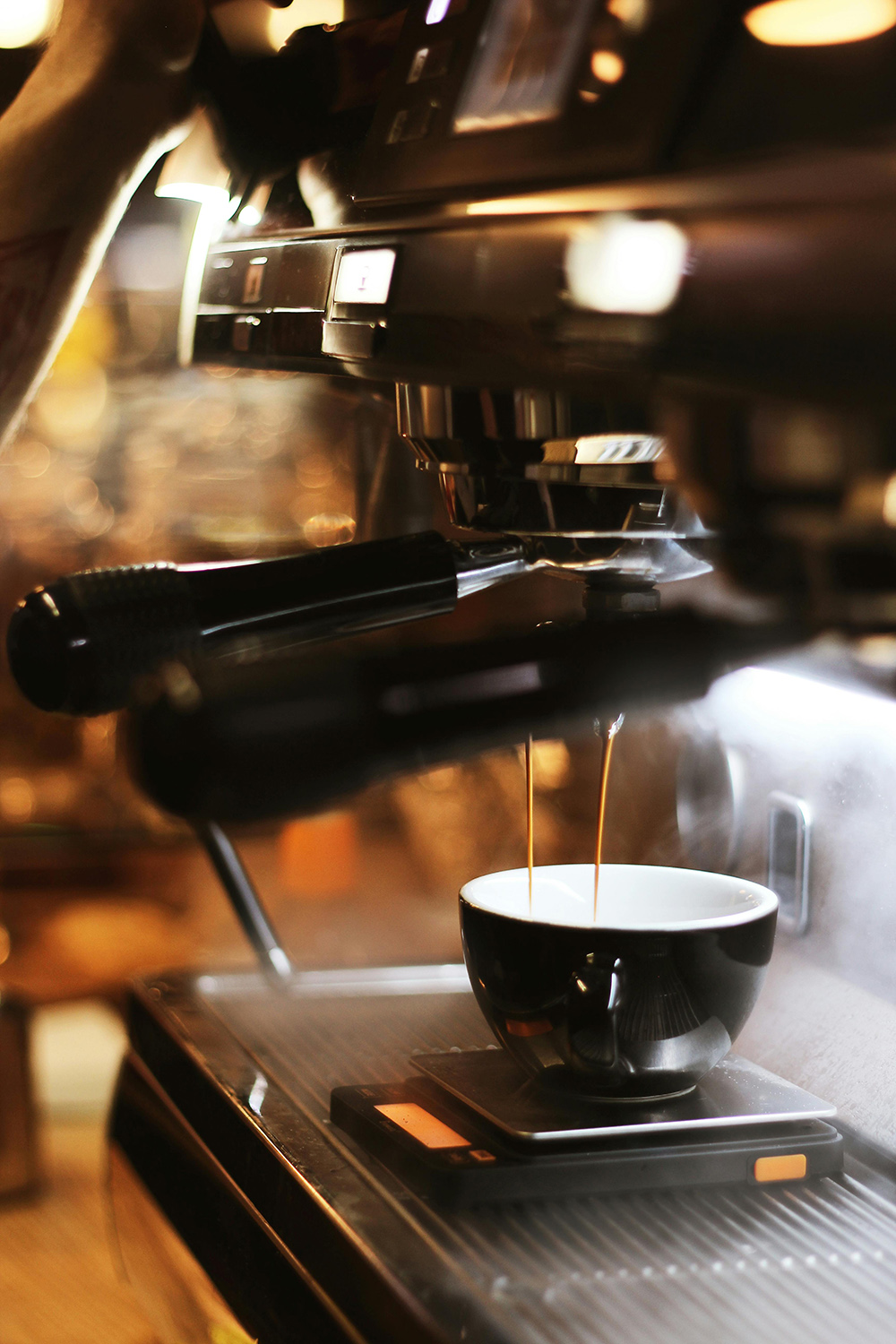
More advanced technology and sustainability – what modern espresso machines changed
From the 1990s into the early 2000s, espresso machines continued to shift towards electronics – better temperature management, more stable performance, and greater consistency. In the following decade – especially from the 2010s onwards – the premium segment began to adopt features that let baristas shape extraction more deliberately, not only through grind and recipe, but also through how the machine delivers water and pressure.
Key innovations of this phase included:
- gravimetrics and brew-by-weight – real-time weighing became increasingly important in specialty coffee, first mainly through precision barista scales (such as the widely used Acaia Lunar from 2015), and later through selected gravimetric,
- implementations in commercial machines,pressure profiling – the ability to program or reproduce a pressure curve during a shot, largely available in high-end platforms designed for this purpose, such as the La Marzocco Strada EP,
- flow profiling (flow control) – regulating water flow, often via a needle valve, as a tool for extending pre-infusion and changing the dynamics of extraction; this approach was popularised by machines associated with the Slayer style of brewing,
- new interfaces and automation – more advanced control panels, screens and programmable functions became increasingly common in premium machines (for example, Victoria Arduino Black Eagle; La Marzocco KB90 from 2019; and, in the prosumer space, screen-based machines with profiles such as Sanremo YOU),
- faster warm-up and energy efficiency – alongside classic, well-insulated boiler-based designs, new approaches to heating and control gained ground (for example, Decent Espresso DE1 from 2018), while manufacturers increasingly added energy-saving modes and features that simplify day-to-day operation.
As a result, today’s premium espresso machines give baristas far greater control over extraction – from stable temperature and repeatability to deliberately “shaping” a shot through pressure or flow – which can be used to emphasise specific sensory qualities in the cup.
In short – how espresso machines evolved and what may come next
More than 140 years have passed since Angelo Moriondo’s 1884 patent – and today’s machines with pressure and flow profiling. Key milestones along the way include:
- the shift from 1–2 bars to around 9 bars (Gaggia, 1940s–1950s),
- improved temperature stability and repeatability (Faema E61, La Marzocco GS, 1960s–1970s),
- digital precision and personalisation (1990s–today).
Each of these changes didn’t just improve espresso quality – it also changed the way we drink coffee, from a simple “strong black” to a drink where flavour, aroma and texture can be shaped deliberately by the barista.
The history of espresso machines makes one thing clear – technology hasn’t evolved to replace the human element, but to give people better tools to bring out the best in the coffee. Traditional benchmarks – around 9 bars, roughly 25–30 seconds and crema – have remained central for decades. What has changed is how we reach those parameters – from a hand lever to app-connected control.
So what’s next? We’ll likely see more automation supported by AI – for example, systems that automatically adjust parameters to a specific coffee – alongside a stronger focus on energy efficiency and, possibly, new approaches to extraction. But one thing is certain – espresso, both as a drink and as a technology, will remain a showcase of innovation.
