


If you are looking for a simple but impressive crustless cheesecake, without a long list of ingredients, this recipe is for you. It works beautifully both for special occasions and for everyday serving.
This simple lemon cake is tender, moist and full of fresh, natural lemon flavour, with a pleasant balance between sweetness and a lightly refreshing finish. Read on to discover our easy recipe, along with advice on how to store the cake so it keeps its freshness for longer.
What does this cake taste like, and what is its texture?
This lemon cake has a very pleasant, fresh and clean flavour. The lemon is clearly noticeable, but it does not dominate with sharp acidity. Instead, it brings lightness, aroma and that characteristic refreshing finish. The sweetness is well balanced, so the cake does not feel heavy or overly sugary. The addition of lemon zest and juice gives it a natural, more homemade flavour than cakes based on artificial flavourings.
In terms of texture, the cake is tender, moist and delicate, but still firm enough to slice neatly without falling apart. The crumb is fine, even and springy, while the oil and yoghurt help the cake stay fresh for longer. It is not a dry pound cake and not a fluffy sponge either — it sits somewhere between a classic loaf cake and a light lemon cake with a more moist centre.

Simple lemon cake recipe
Ingredients for 1 loaf tin:
- 4 medium eggs, at room temperature
- 170 g caster sugar
- 160 g neutral-tasting vegetable oil
- such as rapeseed or grapeseed oil
- 170 g natural yoghurt, at room temperature
- zest of 1 large lemon
- 5–6 tablespoons lemon juice
- around 50–60 ml
- 300 g plain flour
- 50 g potato starch
- 2 level teaspoons baking powder
- a pinch of salt
- ½ teaspoon vanilla extract
How to make lemon cake
- Take the eggs and yoghurt out of the fridge in advance so they can come to room temperature.
- Preheat the oven to 170°C, conventional setting.
- Prepare a large loaf tin, ideally around 25 × 11 cm, and line it with baking parchment.
- Wash the lemon thoroughly, pour boiling water over it, grate the zest and squeeze out 5–6 tablespoons of juice.
- In a separate bowl, combine the flour, potato starch, baking powder and a pinch of salt.
- Crack the eggs into a large bowl, add the sugar and beat with a mixer for a few minutes until pale and fluffy.
- With the mixer running on medium speed, slowly pour in the oil in a thin stream.
- Add the yoghurt, lemon juice, lemon zest and vanilla extract, then mix briefly, just until combined.
- Add the dry ingredients to the wet ingredients and mix briefly but thoroughly with a spatula, or with a mixer on the lowest speed, only until you have a smooth batter.
- Pour the batter into the loaf tin and gently level the top.
- If you would like the cake to crack nicely down the centre, run a spoon or spatula lightly along the top of the batter, creating a shallow line down the length of the tin.
- Place the tin in the preheated oven and bake for around 50–60 minutes.
- After 45 minutes, check the centre of the cake with a skewer. If it comes out dry, or with only a few crumbs attached, the cake is ready.
- If the top starts browning too much while the centre is still underbaked, loosely cover the cake with a piece of aluminium foil and continue baking.
- Once baked, remove the cake from the oven and leave it in the tin for 10–15 minutes.
- Then take it out of the tin and transfer it to a wire rack to cool completely.
- The cake is best sliced only once it has cooled fully.

What does this cake go well with, and how should you serve it?
This is one of those cakes that works beautifully both for everyday moments and when you want to put something simple but genuinely good on the table. It is perfect with afternoon coffee, with tea, for a weekend gathering with family or friends, and even as a light dessert after lunch or during the holidays. Thanks to its lemon character, it works especially well in spring and summer, but in practice you can bake it all year round.
The most natural pairing for this cake is coffee with a gentler profile. It goes very well with an americano, which does not overpower the flavour of the bake and allows the lemon freshness to come through. Black filter coffee is also a good choice, especially one with citrus, floral or tea-like notes. If you prefer milk-based coffees, a light latte will work too — especially if you want to soften the lemon accent and serve the cake in a more dessert-like style.
Espresso can also work, but preferably one that is balanced, sweeter in profile and not roasted too dark. A very intense, bitter espresso could dominate the cake’s delicacy. Cappuccino, on the other hand, will be a good choice for those who enjoy classic pairings and want the whole experience to feel a little creamier. Beyond coffee, the cake also tastes excellent with black tea, Earl Grey or a delicate jasmine tea.
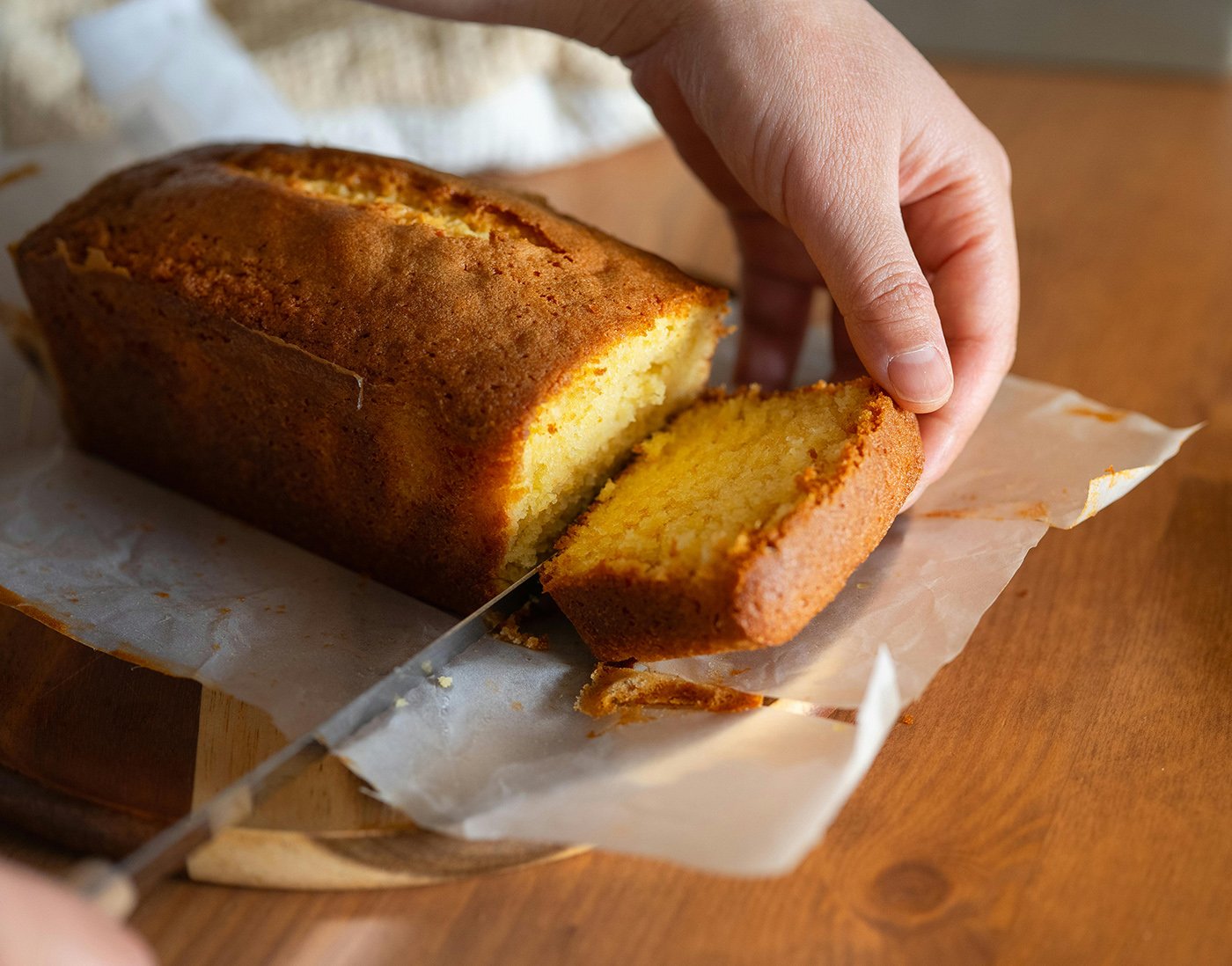
How to store this lemon cake
This cake is best stored once it has cooled completely, tightly covered so it does not dry out. You can keep it at room temperature for around 2–3 days — ideally under a cake dome, in a cake container, or wrapped in paper and loosely covered with foil. Thanks to the addition of oil and yoghurt, it stays moist for a long time, so even the next day it remains tender and delicious.
If your home is very warm, or you want to keep the cake for longer, it is worth placing it in the fridge, preferably in a sealed container. It will stay fresh for around 4–5 days, although after chilling it may become slightly firmer. Simply take a slice out a dozen or so minutes before serving so it softens again and regains a better texture.
This cake also freezes well. It is best to slice it first or cut it into larger pieces, wrap it tightly and place it in the freezer. After defrosting, it remains moist and delicate, especially if thawed slowly at room temperature.
