


If you are looking for a simple but impressive crustless cheesecake, without a long list of ingredients, this recipe is for you. It works beautifully both for special occasions and for everyday serving.
What is coffee cupping?
Cupping is a fascinating ritual that reveals a wide spectrum of flavors and aromas often hidden deep within coffee beans. It is a method widely used by coffee producers, importers, roasters, and baristas to assess the quality and characteristics of coffee.
Cupping allows for an in-depth evaluation of a coffee’s aroma, acidity, body, and specific flavor notes, helping identify both strengths and potential defects in the beans.
With the rise of third-wave coffee culture, cupping has become increasingly popular among consumers as well. It's not reserved only for experts—anyone passionate about coffee can take part and begin their journey in understanding and appreciating coffee flavors.
What is the purpose of cupping?
Cupping is not just a tool for baristas — it is an essential process for coffee roasters. It helps them evaluate roasting profiles, detect potential flaws, and refine their techniques to bring out the best in each coffee.
Additionally, cupping allows for direct comparisons of different roast levels of the same coffee, ensuring the optimal profile is selected to highlight the unique characteristics of each bean.
How to assess coffee during cupping?
The cupping process requires focus and sensory awareness to fully uncover the complexity of a coffee’s flavor profile. Professionals analyze several key aspects:
Aroma
Aroma is assessed both before and after brewing:
- Dry aroma – Smelling the ground coffee before adding water helps reveal initial scent notes, such as floral, fruity, nutty, or chocolatey tones.
- Wet aroma – After the coffee is brewed, its aroma changes and may become more intense, unveiling additional subtle nuances.
Many professionals use a coffee flavor wheel to identify and describe specific scents more precisely.
Flavor
Flavor evaluation includes three primary aspects:
- Acidity – A desirable trait that adds brightness and complexity to coffee, ranging from subtle citrus-like notes to vibrant fruitiness. Well-balanced acidity enhances the coffee’s liveliness.
- Body – Refers to the mouthfeel and texture of the coffee. It can be light, medium, or full-bodied, similar to different fat levels in milk. A full-bodied coffee feels rich and creamy, while a light-bodied coffee is more delicate.
- Sweetness – Naturally present in well-roasted coffee, sweetness can manifest as chocolate, caramel, honey, or fruity notes. The balance between sweetness, acidity, and bitterness is key to an enjoyable cup.
Aftertaste
The lingering flavors after swallowing the coffee. A high-quality coffee should leave a pleasant, lasting impression rather than a harsh or overly bitter finish. Aftertaste often reveals additional layers of flavor, such as spices, fruit, or cocoa notes.
Balance
Balance refers to the harmony of all taste elements—acidity, sweetness, body, and aftertaste. A well-balanced coffee ensures that no single characteristic overwhelms the others, creating a smooth and enjoyable cup.
How to conduct a coffee cupping?
Cupping is a standardized, professional tasting method that ensures consistency in evaluating coffee worldwide.
Preparation
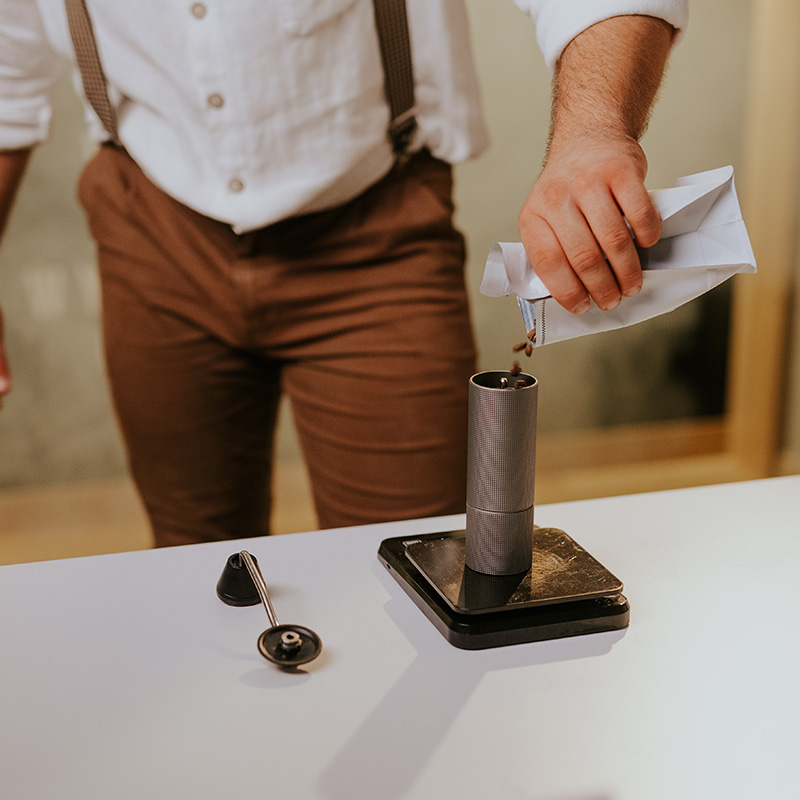
The first step is grinding the coffee to a medium-coarse consistency, similar to what is used for pour-over brewing. In home settings, this can be achieved by setting a manual grinder to around 24 clicks. Proper grinding ensures optimal extraction and accurate flavor evaluation.
Coffee-to-water ratio
Using precise measurements is crucial for a fair comparison between different coffees. The standard cupping ratio is 12 grams of coffee per 200 ml of water. Every sample should be prepared the same way to ensure consistency in the tasting process.
The cupping process – step by step
1. Assess dry aroma
After grinding, the first step is to evaluate the dry aroma. Each cup of ground coffee is carefully sniffed to detect initial scent notes. This provides the first impression of the coffee’s character.
2. Brewing the coffee
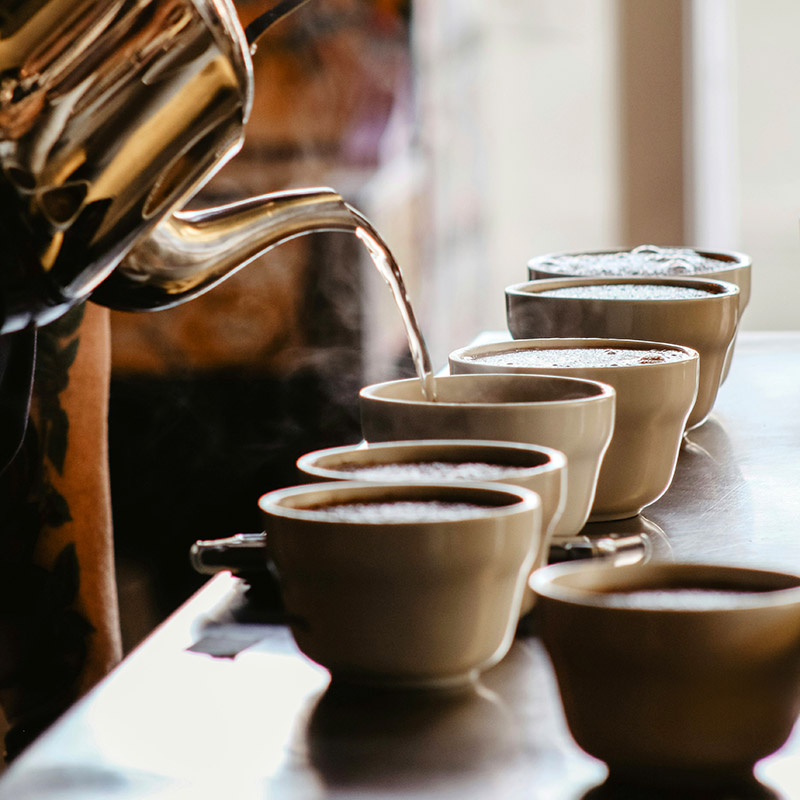
Once all cups are prepared, they are evenly filled with water at a temperature of 93-96°C. The brewing process begins, and a timer is set for exactly four minutes. This period allows the coffee to fully extract its flavors. During this step, the wet aroma is also evaluated.
3. Breaking the crust
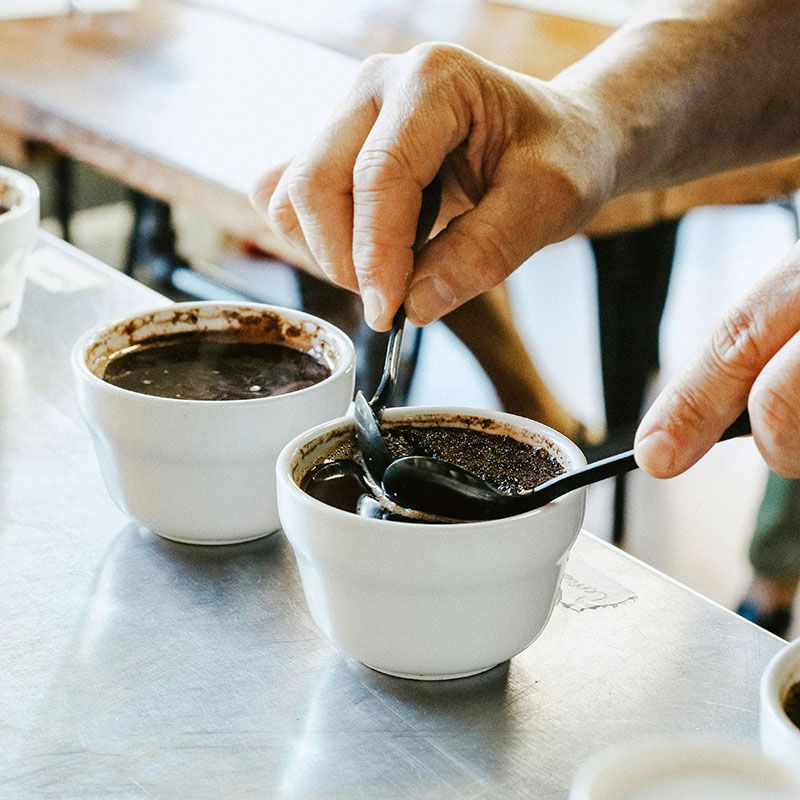
After four minutes, a thick layer of coffee grounds forms on the surface, known as the "crust." Using two spoons, this crust is gently broken, releasing a concentrated burst of aroma. This is another key moment for assessing the coffee’s fragrance.
After breaking the crust, any remaining floating grounds are carefully removed to prepare for tasting.
4. Cooling the coffee
The coffee should cool to about 60°C before tasting. This allows flavors to develop fully and ensures a more accurate assessment of acidity, sweetness, and body. Cooling takes approximately 5-6 minutes after breaking the crust.
5. Tasting and evaluating flavor
After 12 minutes, the coffee reaches an optimal tasting temperature. Spoons are used to slurp the coffee, aerating it across the palate to reveal its complexity.
As the coffee continues to cool, its body, acidity, and balance become more apparent. The final step is assessing how well these elements integrate, leading to an overall evaluation of the coffee.
Key factors to consider in cupping
- Bean selection – Always use freshly roasted, high-quality beans to get an accurate assessment.
- Environment – The cupping area should be free from distracting smells, as aromas play a critical role in coffee evaluation.
- Consistency – Every cup should be prepared in exactly the same way for reliable comparisons.
- Documentation – Keeping detailed notes on each coffee helps track findings and refine personal preferences over time.
Cupping is more than just a technique—it’s a gateway to understanding the vast diversity of coffee flavors. Whether you're a professional in the coffee industry or an enthusiast, cupping is a rewarding experience that deepens appreciation for specialty coffee and enhances sensory skills.
