


If you are looking for a simple but impressive crustless cheesecake, without a long list of ingredients, this recipe is for you. It works beautifully both for special occasions and for everyday serving.
Crema, ratio, yield, TDS – decoding key coffee terms
The art of brewing coffee is a fascinating field where knowledge, precision, and practice go hand in hand. To fully understand the process of making the perfect espresso, it’s worth getting familiar with key terms often used by baristas and coffee enthusiasts. Words like crema, ratio, yield, and TDS might seem technical, but this article will break them down and explain how they influence the final cup.
What is crema, and why does it matter?
Crema is the golden layer of foam that forms on the surface of freshly brewed espresso. Its color—ranging from light to dark brown—results from an emulsion of coffee oils, carbon dioxide, and tiny coffee particles. Crema is often seen as a sign of good espresso, but its presence alone does not guarantee quality
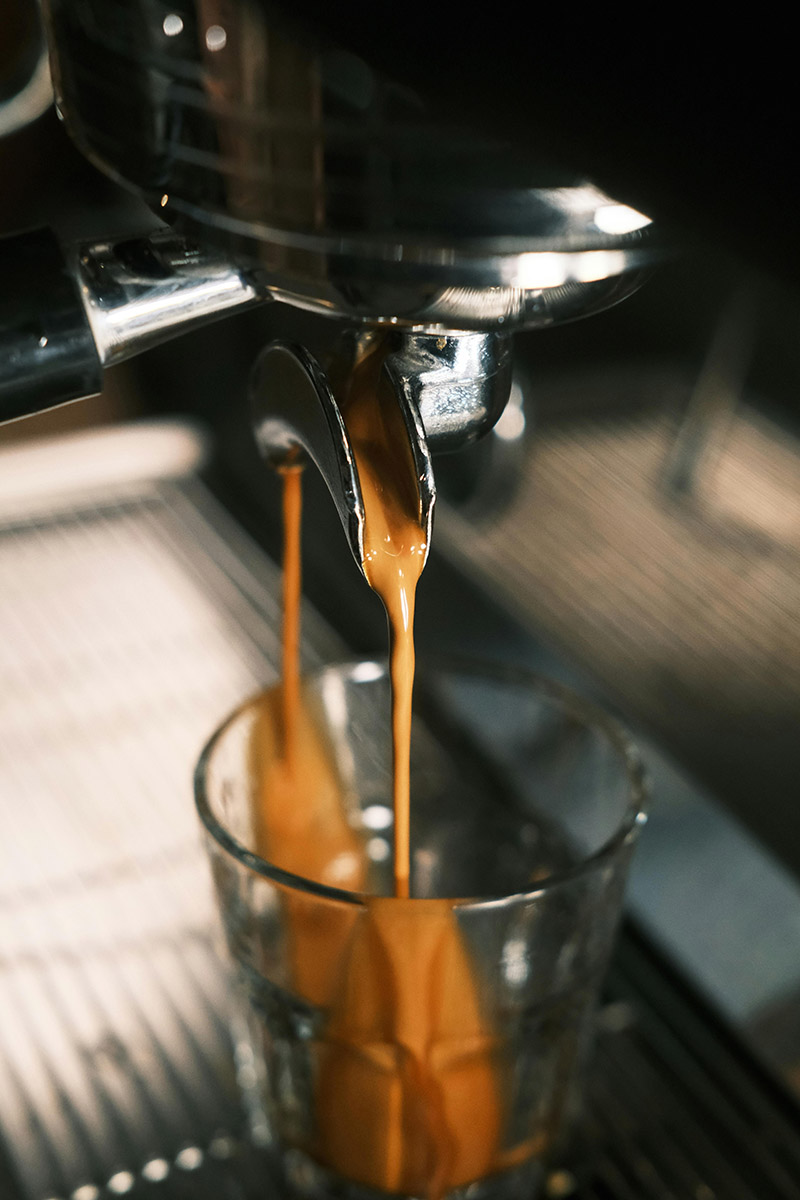
What should you know about crema?
- Visual appeal – A thick, long-lasting crema can indicate fresh beans and proper extraction. However, lightly roasted specialty coffee may produce less crema despite excellent flavor.
- Aroma retention – Crema acts as a protective layer, trapping the coffee’s aromas and slowing their dissipation.
- Texture influence – It adds smoothness and contrast to the espresso experience.
Factors affecting crema
- Bean freshness – Beans roasted 2–4 weeks before brewing contain more carbon dioxide, promoting crema formation. However, too much gas can disrupt proper extraction.
- Roast level – Medium and dark roasts produce more crema due to higher oil and gas content. Light roasts create less crema but have more floral and fruity notes.
- Grind size – Too coarse a grind leads to weak extraction and thin crema, while too fine a grind can cause over-extraction and bitterness.
- Brewing technique – Correct temperature (90–96°C), pressure (about 9 bars), and extraction time (25–30 seconds) are crucial for achieving optimal crema.
Why do some experts remove crema?
Although crema is often associated with high-quality espresso, some baristas remove it before tasting. This is because crema can contain bitterness that overshadows subtle flavor nuances. By skimming it off, they can better appreciate the coffee’s full balance of flavors.
What is ratio – the key to perfect proportions?
Ratio refers to the proportion of ground coffee to the final brewed espresso. It’s expressed as a ratio, such as 1:2.
For example, if you use 18 g of ground coffee and extract 36 g of espresso, your ratio is 1:2.
Why does ratio matter?
- Flavor balance – Different ratios create different taste profiles:
- 1:1 (ristretto) – Intense, dense, and concentrated.
- 1:2 (espresso) – A balanced interplay of acidity and body.
- 1:3 (lungo) – Lighter, smoother, and more diluted.
- Consistency – Precise ratios ensure you can reproduce your favorite espresso every time.
How to calculate ratio?
- Weigh the ground coffee dose (e.g., 18 g).
- Weigh the final brewed espresso (e.g., 36 g).
- Divide the yield by the dose: 36 g / 18 g = 2.
This simple equation forms the foundation of accurate espresso brewing.
What is yield – how much coffee ends up in the cup?
Yield refers to the final weight of the brewed espresso, measured in grams.
How does yield impact coffee flavor?
- Lower yield (e.g., 25 g from 18 g of coffee) – The result is an intense, thick, and concentrated espresso.
- Higher yield (e.g., 40 g from 18 g of coffee) – The espresso becomes milder, with lighter, more delicate notes.
Adjusting yield allows for customizing the coffee’s strength and texture based on the beans and personal preferences.
What is TDS (Total Dissolved Solids)?
TDS represents the percentage of dissolved solids in a coffee brew, indicating its concentration.
How is TDS measured?
TDS is measured using a refractometer, a device that precisely determines the dissolved solids content in the liquid.
Typical TDS values for different brew methods:
- Espresso – 8–12%
- Pour-over coffee – 1.2–1.5%
- French press – 1.5–2.0%
Why is TDS important?
TDS helps control extraction efficiency, determining how many flavor compounds are extracted from the beans. Each brewing method has its ideal TDS range, but a well-balanced flavor is the ultimate goal.

Summary: Master the parameters, discover new flavors
Understanding terms like crema, ratio, yield, and TDS helps improve control over the brewing process, unlocking coffee’s full flavor potential. Experimenting with these parameters allows for personalizing the coffee experience and discovering new taste profiles.
However, the key to great coffee lies not only in technique but also in bean quality, freshness, and proper equipment. With the right approach, every cup can be an exceptional experience—not through “art,” but through precision and knowledge.
